Skip to content

China Top Courier Bag Manufacturers for Global Buyers?

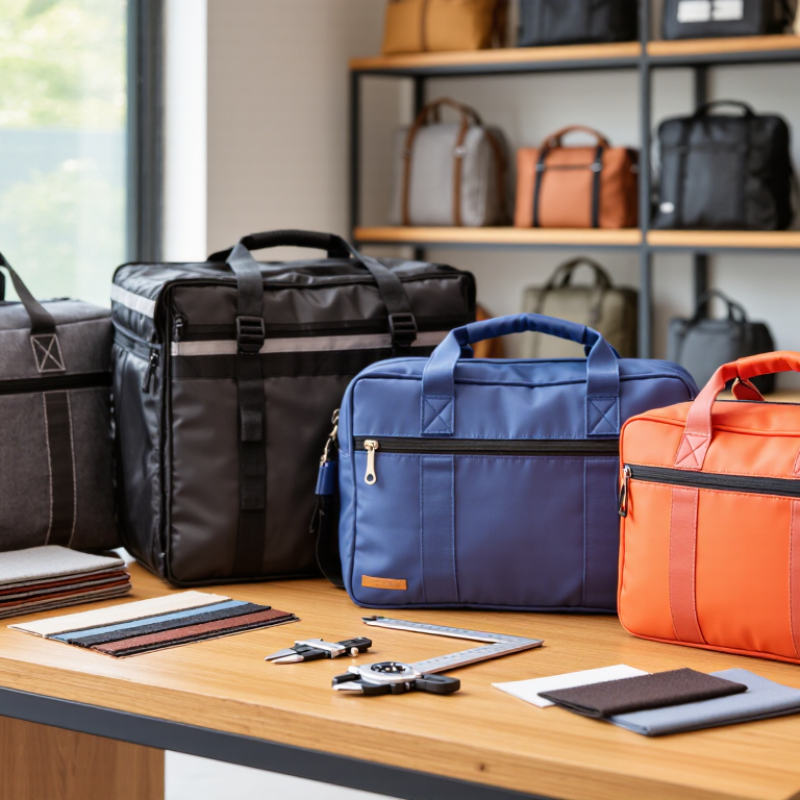
Choosing a China-based Courier Bag manufacturer involves more than comparing prices. Global buyers also need dependable construction, clear communication, and production that matches approved samples. A useful evaluation starts with the bag itself: fabric weight, seam reinforcement, zipper quality, handle attachment, and weather-resistant finishes. These details affect how a bag performs during repeated daily use.

Samples reveal what catalogs cannot. Check whether stitching remains even around corners and whether loaded handles feel secure. Small details matter. A smooth zipper helps. So does a label placed consistently. Still, one sample cannot prove every production run will be identical. That deserves attention.

This guide explores manufacturers serving different business needs, from standard delivery bags to customized designs. It considers product range, material options, customization support, quality-control practices, factory communication, and order flexibility. Buyers can use these points to prepare focused questions before requesting quotations or samples. Ask how specifications are documented, how changes are approved, and how defects are handled. Clear answers are reassuring; vague promises are not.

There is no universal best supplier. A manufacturer suited to a large recurring order may not fit a small trial run. Prices can also hide differences in fabric, packaging, or inspection scope. Comparing like with like takes effort. It is worth doing. The aim is a practical shortlist, not a perfect-sounding claim: one that helps buyers assess Courier Bag manufacturers with evidence, realistic expectations, and room for further verification.
China Top Courier Bag Manufacturers for Global Buyers?

Courier Bags: Types, Materials, and Common Applications

Courier bags are selected by shipment shape, handling, and delivery conditions. Poly mailers are lightweight and resist splashes, making them useful for soft goods and documents. Padded mailers add cushioning for small items that could be scratched or bent. For larger parcels, woven or reinforced bags provide stronger seams and better load support. Security bags often use tamper-evident closures, though a seal cannot prevent every handling problem.

Materials change performance. Low-density polyethylene is flexible and water-resistant, while recycled-content films can reduce reliance on virgin plastic when their quality is verified. Paper courier bags suit flat, relatively light products and may be easier to sort, depending on local facilities. Woven polypropylene handles heavier loads, but reuse and recycling depend on construction and available collection systems. Check seam strength, closure adhesion, and dimensions with real packed samples. Small details matter.

Common applications include apparel orders, paperwork, samples, and routine business shipments. A clothing seller may prefer an opaque, tear-resistant mailer; a document service may need a rigid insert to keep corners flat. There is no perfect bag. Oversizing wastes material, while thin film can split around sharp edges. Test it. Try typical routes and packing methods before setting a specification.

How China’s Courier Bag Manufacturing Industry Is Organized

China’s courier bag manufacturing industry is a network, not one uniform factory floor. Production often starts with material suppliers providing coated polyester, nylon, webbing, zippers, and foam. Cut-and-sew workshops turn these inputs into insulated delivery bags, document pouches, or high-visibility carrier bags. Some factories focus on stitching; others handle pattern development, printing, packing, and export coordination. Larger suppliers may manage several steps, while smaller workshops rely on specialist partners. The division varies by product and order size.

For global buyers, identifying who performs each step matters. A supplier may design samples in-house but outsource printing or final sewing. Ask where materials come from, who checks measurements, and how defects are recorded. Review a physical sample for seam consistency, zipper movement, strap reinforcement, and lining thickness. A clear production schedule should name key checkpoints, not just a shipping date. Factory capacity can also change with seasonal demand, so a successful sample does not guarantee identical bulk production. That detail is easy to overlook.

Tips: Request a sample made with the intended materials. Confirm whether subcontractors are involved, and agree on acceptable measurements and inspection points in writing. Keep a few production photos on file. They help, though they cannot replace an inspection.

Key Criteria for Evaluating Chinese Courier Bag Manufacturers

A courier bag must handle repeated opening, rough sorting, and changing weather. Ask manufacturers which fabric they use, and request its thickness and coating details. Check seams, handles, and zipper attachment points on a physical sample. These areas often show weakness before the main panel does. Details matter.

Test the bag under realistic conditions. Load it with the weight it will carry, then inspect stitching and closure performance after repeated use. If water resistance matters, agree on a test method and review the results. Do not rely only on a product photo or a general claim. A polished sample can still hide production variation; one sample is not enough.

Review quality controls, production capacity, and communication before placing an order. Ask how defects are recorded and how approved specifications are shared with the production team. Confirm lead times, minimum order quantities, packaging, and inspection arrangements in writing. Price matters, but the cheapest quote may omit useful testing or consistent materials. There is no perfect supplier, and even a careful evaluation can miss something. Keep clear sample records and compare them with goods from a later production run.

Quality, Customization, Compliance, and Sustainability Considerations

For global buyers, a courier bag should be judged by performance, not a glossy sample. Ask manufacturers for film thickness records, seam-strength results, and puncture testing from production batches. Check whether adhesive strips stay closed after cold storage and rough handling. A small pilot order can reveal weak seals or inconsistent sizing before large volumes ship. That step takes time. It is worth it.

Customization should match real packing workflows. Confirm dimensions against the items packed, then test print legibility, barcode scanning, and opening features on finished bags. Request material specifications, batch traceability, and destination-market documentation. Requirements vary, so buyers should verify current rules with qualified compliance professionals. One overlooked detail: a well-designed bag can still fail if its label or composition records are incomplete.

Sustainability claims also need evidence. The OECD’s Global Plastics Outlook (2022) identifies packaging as about 40% of plastic waste generated. UNEP’s 2023 assessment says systemic changes could reduce plastic pollution by 80% by 2040. These figures make material choices important, but recycled content alone is not proof of lower impact. Ask for verifiable recycled-content records and compare durability, recyclability, and local waste systems. There is no perfect option. A lighter bag that tears easily may create more waste.

How Global Buyers Can Compare Suppliers and Manage Orders

Comparing Chinese courier-bag suppliers starts with a shared specification, not just a low unit price. UNCTAD estimated global e-commerce sales at $26.7 trillion in 2019, including business-to-business transactions. At that scale, small differences in bag dimensions, film thickness, or seal strength can disrupt packing lines and raise freight costs. Ask suppliers to quote the same material, size, handle style, closure, and printing area. Request samples and check seams, adhesive strips, and water resistance yourself.

The World Bank’s 2023 Logistics Performance Index covers 139 economies and assesses six areas, including shipment timeliness, tracking, and logistics competence. It measures countries, not individual factories, but offers a useful lens for supplier questions. Ask who arranges export shipping, how production updates are shared, and what happens when a shipment misses its planned date. Compare quoted lead times against sample approval, production, inspection, and transit—not just the factory’s stated manufacturing days.

A weakness in many comparison sheets is the focus on price and capacity alone. Record the approved sample’s measurements and materials, then use them as the reference for bulk checks. A pre-shipment inspection can catch uneven seals or inconsistent sizing before cartons leave the factory. Start with a manageable trial order, and agree in writing on packaging, carton quantities, inspection timing, and change approvals. A polished sample is not proof of consistent mass production. Keep that in mind.

China Top Courier Bag Manufacturers for Global Buyers? - How Global Buyers Can Compare Suppliers and Manage Orders

Planning guide: The supplier profiles and ranges below are illustrative benchmarks, not verified quotations or claims about specific manufacturers. Actual specifications, minimum order quantities, lead times, and costs depend on the bag design, materials, order volume, printing, and shipping terms. Confirm all details directly with shortlisted suppliers.

Comparison Dimension Flexible Converter
Suitable for Trials
Standard OEM
Suitable for Regular Orders
High-Volume Producer
Suitable for Large Programs
Typical product focus Poly mailers, return bags, and basic security bags Poly mailers, courier bags, mailing envelopes, and selected custom formats High-volume poly mailers and repeatable, standardized bag programs
Common material options LDPE or co-extruded polyethylene; recycled-content options may be available LDPE, co-extruded polyethylene, and selected recycled-content blends Production-grade polyethylene; material availability and recycled content require confirmation
Indicative order quantity Often around 5,000–20,000 pieces per design, subject to size and printing Often around 10,000–50,000 pieces per design Often 50,000 pieces or more per design; larger runs may be more economical
Custom printing Basic one- or two-color printing may be possible; confirm artwork and setup requirements One- or multi-color printing may be available; confirm print method, color limits, and plate or cylinder charges Best suited to repeat artwork and larger print runs; confirm color tolerances and setup costs
Sample and production timing Samples may take roughly 5–10 business days; production may take roughly 15–25 days after approval Samples may take roughly 7–12 business days; production may take roughly 20–35 days after approval Production may take roughly 25–40 days after approval; timing depends on capacity and order size
Customization to confirm Bag dimensions, thickness, flap, adhesive strip, and basic printing Dimensions, film structure, thickness, adhesive type, tear strip, return strip, and printing Approved specifications, repeat-order tolerances, packaging format, and production scheduling
Quality checks to request Dimensions, thickness, seal strength, adhesive performance, and print legibility Documented inspection plan, sample approval, dimensions, seals, adhesive, and print checks Pre-production approval, in-process checks, final inspection criteria, and batch traceability
Documents to verify Product specification, packing details, and any applicable test reports Product specification, commercial invoice, packing list, and applicable material or test documentation Approved specification, batch records where available, shipping documents, and buyer-required compliance evidence
Best fit for buyers New product testing, smaller launches, or buyers still finalizing specifications Growing brands and distributors with recurring orders and moderate customization needs Established buyers with forecasted demand, stable specifications, and larger shipment plans
Main trade-off to assess Unit cost and customization choices can vary more with small runs Balance between customization, order size, production capacity, and delivery schedule Large minimums, longer planning horizons, and the need for accurate demand forecasts
Order Management Checks for Global Buyers
Before requesting quotations Prepare one shared specification sheet covering bag dimensions, thickness measurement method, material, color, printing artwork, adhesive and closure details, packing method, target quantity, destination, and required delivery date.
When comparing quotations Compare like-for-like specifications. Ask suppliers to separate unit price, printing or tooling charges, sample costs, packaging, payment terms, quotation validity, and freight assumptions. Confirm the named Incoterm and destination.
Before mass production Approve a physical or clearly documented pre-production sample. Record the final specification, artwork version, tolerances, inspection criteria, carton details, and written production schedule.
During production and shipment Agree on progress updates and inspection timing in advance. Verify carton markings, quantities, packing list, shipping documents, and booking details before dispatch.
For repeat orders Keep a controlled record of the approved sample, specification, artwork, order history, and any corrective actions. Reconfirm material availability, price, lead time, and specification changes for each reorder.