Why Choose a Metallurgical Bridge Crane for Your Facility?
When considering operational efficiency in heavy industries, a Metallurgical Bridge Crane stands out as a crucial asset. Renowned expert Dr. John Lawson, an authority in crane technology, states, "A Metallurgical Bridge Crane can revolutionize material handling in high-demand environments." This emphasizes the importance of investing in the right equipment for productivity.
Choosing a Metallurgical Bridge Crane not only enhances lifting capabilities but also improves safety and reduces workplace injuries. Its design allows for maneuvering heavy loads with precision. The advanced technology of these cranes benefits facilities that handle metals, providing reliability in challenging tasks.
However, investing in a Metallurgical Bridge Crane requires careful analysis. It’s essential to assess your facility's specific needs and available space. Without this reflection, the crane may not fulfill its intended purpose, leading to inefficiencies. Ultimately, the decision must balance technology and practicality for optimal results.
Benefits of Metallurgical Bridge Cranes in Heavy Industry Operations
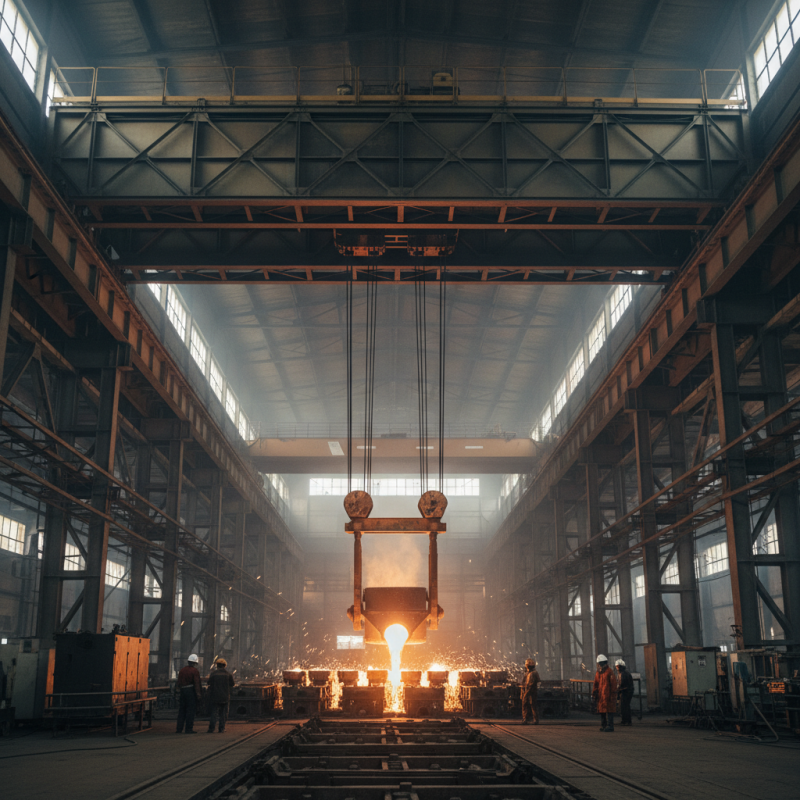
Metallurgical bridge cranes play a vital role in heavy industry operations. They are designed to handle heavy loads and extreme conditions. These cranes are often used for transporting molten metal and heavy components. Their robust build ensures durability in demanding environments.
One major benefit is efficiency. Metallurgical bridge cranes can quickly move materials where they are needed. This reduced downtime can significantly enhance productivity. Operators often find the smooth operation of these cranes improves workflow. However, maintenance can be tricky. Regular checks are crucial to avoid breakdowns.
Tip: Always train staff on best practices for using these cranes. Proper training minimizes the risk of accidents. It also ensures that operators are familiar with the crane's capabilities.
Moreover, metallurgical bridge cranes provide safety. They can be equipped with advanced safety features. Yet, over-reliance on technology can lead to complacency. Operators must stay vigilant to monitor performance. Awareness of potential issues is essential.
Key Specifications and Features of Metallurgical Bridge Cranes
Metallurgical bridge cranes are essential for facilities working with heavy materials. These cranes are designed to handle extreme conditions. They can lift molten metals and heavy machinery safely. Their robust construction ensures reliability even in harsh environments.
Key specifications include high lifting capacities and advanced safety features. Many metallurgical cranes can lift loads exceeding 100 tons. They often come equipped with double girder designs, providing excellent stability. Operators benefit from intuitive controls, enhancing efficiency. Some models incorporate smart technology for better monitoring and operation.
However, maintenance requirements can be demanding. Regular inspections are crucial to prevent unexpected breakdowns. Ignoring maintenance can lead to costly repairs. Finding the right balance between efficiency and safety is vital. Each facility needs to assess its unique operational needs and challenges carefully.
Comparative Analysis: Metallurgical Cranes vs. Traditional Lifting Equipment
Metallurgical cranes hold distinct advantages over traditional lifting equipment in heavy industrial scenarios. According to industry reports, metallurgical cranes can increase operational efficiency by 30% compared to conventional hoists. They excel in handling metals and materials at high temperatures. This capability reduces the risk of damage and enhances safety during operations.
Traditional lifting equipment often struggles with heat resistance and durability. Many operators find themselves replacing equipment more frequently. Manufacturing studies indicate that maintenance costs for traditional cranes may exceed 15% annually. In contrast, metallurgical cranes are designed for extreme conditions. Their robust structure offers longevity and reliability.
However, it's not without shortcomings. The initial investment for metallurgical cranes can be substantial. Facilities must weigh this cost against long-term savings and productivity gains. Training staff to operate specialized equipment can also present challenges. While these cranes can outperform traditional alternatives, staff adaptation remains an essential aspect of implementation.
Safety Standards and Compliance in Metallurgical Crane Usage
Safety is paramount in any facility that utilizes metallurgical bridge cranes. According to the Occupational Safety and Health Administration (OSHA), heavy lifting equipment must meet rigorous safety standards. In industries that handle molten metals, the risks increase significantly. A small oversight can lead to catastrophic accidents. It's essential to understand the safety framework that governs the use of these cranes.
Compliance with safety regulations is non-negotiable. The American Society of Mechanical Engineers (ASME) outlines specific standards for crane operation. These include routine inspections and maintenance checks. A study by the National Institute for Occupational Safety and Health (NIOSH) reported that nearly 50% of crane-related injuries stem from inadequate training and equipment failure. This statistic underlines the need for comprehensive training programs for operators. Without proper knowledge, even the most advanced equipment can pose serious hazards.
Moreover, environmental factors also affect safety. Extreme temperatures can impact the crane's performance. Material fatigue can occur, leading to structural failures. A crane that operates in an ambient environment of 100°F or higher may experience up to a 20% reduction in performance. Regular assessments are crucial to counter these risks. Ignoring them could lead to unpleasant surprises and significant operational downtime.
Why Choose a Metallurgical Bridge Crane for Your Facility? - Safety Standards and Compliance in Metallurgical Crane Usage
| Feature | Description | Compliance Standards | Safety Benefits |
| Load Capacity | Designed to handle heavy materials, up to 550 tons | ISO 9001 | Increases efficiency in heavy load handling |
| Durability | Built with high-quality materials for extended lifespan | ASTM A36 | Reduces failure rates and maintenance costs |
| Safety Features | Equipped with emergency stop buttons, limit switches | OSHA Compliance | Enhanced operator safety during crane operation |
| Operational Efficiency | Offers high speed and precision in material handling | CE Marking | Increases productivity and reduces idle time |
| Maintenance | Designed for easy access to components for routine checks | ISO 13849 | Minimizes downtime and extends service intervals |
Cost-Benefit Analysis of Integrating Metallurgical Cranes in Facilities
Integrating metallurgical cranes can offer significant benefits to any facility. These cranes improve workflow efficiency. They excel in heavy lifting and offer durability in demanding environments. When evaluating costs, think beyond just the purchase price. Consider maintenance and operational efficiency. A metallurgical crane can reduce labor costs over time. Safer operations lead to fewer workplace accidents, which is crucial.
Tips: Assess your facility's specific needs. Not all operations are the same. Evaluate the types of materials you handle. Heavy-duty cranes might be necessary for certain tasks. Sometimes, the cheapest option isn't the best in the long run.
Moreover, energy efficiency is a crucial factor to consider. Many modern metallurgical cranes come with advanced features that minimize energy consumption. This can lead to lower utility costs. While the initial investment might seem high, the long-term savings can be substantial. Reflect on how your operations can grow. Will a metallurgical crane be appropriate for future demand?
 Skip to content