Skip to content

Top 10 Tips for Choosing the Best Forklift Parts for Your Needs?

Choosing the right forklift parts can be a daunting task. According to John Smith, a well-respected expert in the forklift industry, “Selecting quality forklift parts is crucial for safety and efficiency.” This insight captures the essence of what many operators face daily. They want reliable machinery but may overlook the significance of individual components.

Many people dive into this process without thorough research. They often prioritize price over quality. However, this can lead to costly repairs down the line. Quality forklift parts can enhance performance, increase safety, and extend the life of the equipment. On the other hand, poor choices can disrupt operations. It’s vital to balance cost and quality.

Understanding your specific needs is key. Different operations require different parts. Not every part is universal. Consider factors such as compatibility, durability, and warranty. Each decision carries weight. Ultimately, the choices you make today affect your operational success tomorrow.
Top 10 Tips for Choosing the Best Forklift Parts for Your Needs?

Understanding Your Forklift Specifications and Requirements

When choosing forklift parts, understanding your forklift specifications is crucial. Start by checking the model and make of your forklift. This information is often found on a label inside the operator's compartment. Knowing the lift capacity of your forklift is essential. You don’t want to risk using parts that cannot handle the weight.

Tip: Always choose parts that meet OEM standards. Aftermarket parts may seem cheaper. However, they might not be a perfect fit. This can lead to mechanical issues later. Ensure the compatibility of hydraulic components as well. A mismatch can result in leaks or suboptimal performance.

Also, consider the environmental conditions where your forklift operates. If it's in wet or dusty areas, you may need specific filters or seals. Wrong choices can lead to premature wear. Monitor the frequency of usage too. Parts on heavily used forklifts may require more frequent replacement. This strategy can prevent costly downtimes. Remember, quality over price will often save money in the long run.
Top 10 Tips for Choosing the Best Forklift Parts

Assessing the Quality and Durability of Forklift Parts

When choosing forklift parts, quality and durability are critical. According to industry reports, up to 20% of forklift failures can be attributed to subpar parts. This leads to increased downtime and costs. Therefore, selecting reliable components must be a priority for any operator.

Inspecting the materials used in the parts is essential. For instance, steel components should meet specific industry standards. Parts made from lower-quality metals may wear out faster, leading to accidents. A study by the Forklift Safety Institute noted that 75% of accidents occur due to equipment failure. Investing in high-quality materials reduces these risks.

Additionally, consider the manufacturer's reputation. Research shows that brands with stringent quality control processes yield longer-lasting parts. However, not all well-known names guarantee high durability. Smaller manufacturers may offer competitive parts but could lack extensive testing. Evaluate warranties offered. A longer warranty often indicates confidence in product longevity. Ultimately, ensuring quality requires diligent research and assessment of each component's specifications and performance history.

Evaluating Compatibility with Your Forklift Model

When selecting forklift parts, compatibility with your specific model is crucial. Each forklift design has unique specifications. These details influence performance and safety. Always check the manual for part specifications. Some parts may seem similar, but they can have different tolerances and features.

It's important to engage with knowledgeable suppliers. They can provide insights on fit and function. Using incorrect parts can lead to inefficiency or even accidents. Sometimes, people overlook minor differences, leading to major problems later. Conduct visual inspections and ask for real-world examples of performance.

Consider the long-term implications of your choice. Choosing the wrong part might save money upfront, but it could cause bigger issues later. Reflect on past choices and learn from mistakes. Compatibility should always be the top priority when making your selection. When in doubt, seeking expert advice can save time and resources. Always remember to double-check compatibility to avoid future complications.

Comparing Costs and Warranty Options for Forklift Parts

When selecting forklift parts, comparing costs is essential. Research shows that businesses often overlook this critical step. According to a 2022 industry report, over 30% of companies ended up paying more than they should for spare parts due to inadequate pricing research. Costs can vary significantly between suppliers, which is why diligent comparison is key.

Warranty options also play a crucial role. A comprehensive warranty can offer peace of mind. As outlined in a recent study, almost 40% of parts fail within the first year. Choosing parts with strong warranty coverage helps mitigate unexpected expenses. For example, a part with a one-year warranty may save you money in the long run compared to a cheaper option with no guarantee.

Quality should not be sacrificed for cost. A cheaper part can lead to maintenance issues later. An assessment of forklift downtime reveals that issues from low-quality parts account for nearly 25% of operational delays. Evaluating the balance between price, warranty, and quality is vital for successful forklift operations.

Researching Reliable Suppliers and Manufacturers in the Industry

Top 10 Tips for Choosing the Best Forklift Parts for Your Needs?

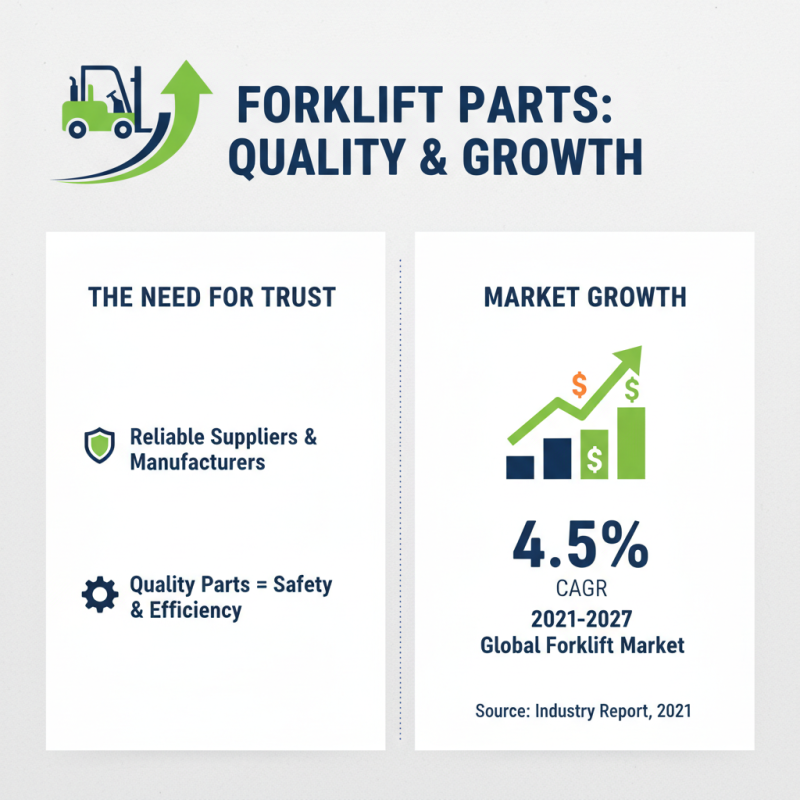
When selecting forklift parts, researching reliable suppliers and manufacturers is crucial. A recent report indicates that the global forklift market is projected to grow at a CAGR of 4.5% from 2021 to 2027. This growth highlights the need for trusted suppliers. Quality parts ensure safety and efficiency in operations.

Look for suppliers with strong reputations. Check customer reviews and industry ratings. It's essential to have detailed information about their manufacturing processes. Ask questions about warranties and return policies. Inconsistent parts can lead to downtime. A report by the Industrial Truck Association emphasizes that up to 30% of operational costs come from maintenance. Ensuring high-quality parts can reduce these costs.

Networking within industry forums can provide insights into reliable suppliers. Personal experiences from other operators can reveal strengths and weaknesses of manufacturers. Examine certifications and standards compliance. A trustworthy supplier should willingly share this information. Balancing cost and quality is often a challenge, yet vital for long-term success.