Skip to content

How to Choose the Best Pallet Lifter in 2026?
How do you choose a Pallet Lifter in 2026? The answer starts with the work it must perform, not the most impressive specification sheet. A unit moving 500-kilogram loads across a smooth warehouse floor may not suit heavier pallets, uneven thresholds, or narrow aisles. Record typical and maximum load weights, pallet dimensions, lift height, travel distance, and daily operating hours. Small details matter. A wheel that catches on a floor joint can slow a busy shift.
Compare manual, electric, and powered options against those real conditions. Check rated capacity at the required lift height, fork dimensions, turning radius, brake design, and available charging or service support. Ask operators to test visibility, handle reach, and control response with representative loads. They notice things a brochure may not show. Also review inspection routines, replacement parts, warranty terms, and the supplier’s ability to provide practical training. A low purchase price can look attractive, but downtime has a cost too.
This guide outlines the main criteria for selecting a Pallet Lifter, from safety and ergonomics to durability and total ownership cost. It also explains which questions to ask before buying and how to compare models fairly. There is no perfect choice for every site. Specifications help, but they do not replace a careful assessment of the floor, workload, and people using the equipment. Some comparisons remain uncertain until the machine is tested in your own operation. That is worth admitting. A considered decision is usually safer and more useful than buying on a headline feature alone.
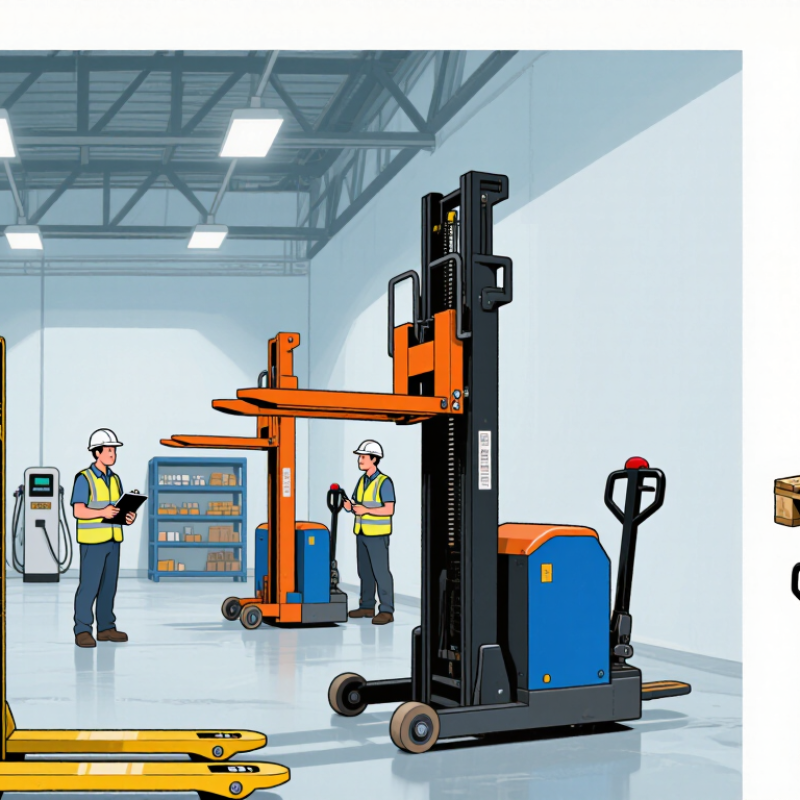
Identify Your Load, Lift Height, and Operating Environment
A pallet lifter should match the load you move every day, not just the heaviest item on paper. Record the pallet’s full weight, including its contents, and check how that weight sits across the forks. A load that hangs far beyond the fork tips can affect stability. Verify the rated capacity and load-centre limits in the equipment specifications. Measure pallet width, too. Tight-fitting forks may scrape the deck; overly wide ones can limit access.
Lift height is more than the distance from floor to shelf. Measure the required fork height, then allow room for pallet entry, uneven loads, and overhead obstructions. Check doorways and rack beams along the route. Measure twice. A few centimetres can matter when stacking. If the lifter only moves loads at floor level, a high-mast model may add cost and bulk without helping.
The operating environment narrows the choice. Note aisle width, floor joints, ramp gradients, and turning space, then consider moisture, dust, and how often the lifter runs. Small wheels can struggle over rough seams; busy shifts may call for less manual effort. A clean warehouse is not always predictable. Spills and temporary obstructions happen. Walk the actual route with a loaded pallet, if practical, and compare your observations with the operating instructions before choosing.
How to Choose the Best Pallet Lifter in 2026? — Identify Your Load, Lift Height, and Operating Environment
| Pallet Lifter Type | Typical Rated Capacity | Typical Lift Height | Best For | Operating Environment | Key Selection Checks |
|---|---|---|---|---|---|
| Manual pallet truck | 2,000–2,500 kg | Approximately 100–200 mm | Moving palletized loads over short distances at floor level | Level, smooth floors; intermittent use in warehouses, retail areas, and loading zones | Confirm the load’s total weight, pallet entry dimensions, fork length, turning space, and floor condition. |
| High-lift pallet truck | Usually 1,000–1,500 kg | Commonly up to approximately 800 mm | Raising pallets to a convenient working height for packing, assembly, or order preparation | Indoor, level floors; generally suited to stationary or short-distance work | Check capacity at the required lift height. Many models are not designed to transport loads while fully raised. |
| Electric pallet truck | Approximately 1,500–3,000 kg | Approximately 100–250 mm | Frequent horizontal movement and longer travel distances with reduced manual effort | Warehouses and distribution areas with suitable floors, charging access, and adequate aisle width | Assess travel distance, duty cycle, battery runtime, charging arrangements, operator controls, and ramp gradients. |
| Walkie stacker | Approximately 1,000–2,000 kg | Commonly 1,600–5,500 mm, depending on model | Stacking pallets or placing loads on low-to-medium-height racks without a seated operator | Indoor use on smooth floors; requires clear aisles and stable, level surfaces | Verify capacity at the intended lift height, mast clearance, aisle width, load stability, and floor load rating. |
| Counterbalanced forklift | Commonly 1,500–5,000 kg for standard warehouse models | Often approximately 3,000–6,000 mm | Higher stacking, dock work, and handling a broad range of palletized loads | Indoor or outdoor use, depending on the power source, tires, and surface conditions | Check the load chart, load center, attachment effects, aisle width, overhead clearance, operator training, and emissions requirements. |
| Rough-terrain pallet truck or forklift | Varies widely; commonly around 1,000–2,500 kg for rough-terrain pallet trucks | Low lift for pallet trucks; forklift heights depend on the mast | Moving palletized materials across uneven outdoor surfaces or construction sites | Outdoor areas with firm, uneven, or occasionally loose ground; not all models suit soft or steep terrain | Match tire type, ground clearance, traction, slope capability, and rated capacity to the actual surface and load. |
Selection note: Capacities and lift heights shown are typical market ranges, not guarantees for a specific machine. Check the equipment’s data plate and load chart, and include pallet weight, load dimensions, load center, attachments, floor conditions, and required lift height in the assessment.
Related Posts
-
Top 5 Pallet Lifter Options for Your Business Needs?
-
Best 10 Pallet Jacks for Efficient Warehouse Operations?
-
How to Choose the Best Manual Pallet Jack for Your Needs?
-
8 Reasons Why a Powered Pallet Jack Is Essential for Efficient Warehouse Operations
-
What Makes the Best Powered Pallet Jack Stand Out in Material Handling
-
Unlocking Efficiency: The Advantages of the Best Reach Truck for Modern Warehousing
Our
Brands