A boom lift can make overhead work more controlled, but only when the machine suits the site and task. Choosing the right Boom Lift Rental means matching working height, horizontal outreach, platform capacity, and ground conditions—not simply choosing the tallest model. Small details matter. A narrow access lane, sloped surface, or low doorway may rule out equipment that looks suitable on paper.
Before requesting a quote, estimate the required working height and the distance workers must reach from the lift. Measure twice. Include workers, tools, and materials when checking platform capacity, and confirm that the machine can travel through the site’s entrances. For outdoor projects, consider ground firmness, wind exposure, and the space needed to position the chassis. Indoor work may call for an electric model with a compact footprint and non-marking tires. These details are easy to overlook, especially when a job seems straightforward.
Compare rental terms, delivery arrangements, service support, and operator familiarity alongside the equipment specifications. Ask the rental provider to explain model limits and recommend options based on your site details; verify key figures against the manufacturer’s documentation. Do not guess. A confident recommendation still needs a site check. This guide outlines practical questions to ask, common trade-offs between lift types, and checks to make before delivery. The best choice is not always the biggest or newest lift. It is the machine that reaches the work safely, fits the route, and supports the job without creating avoidable delays.
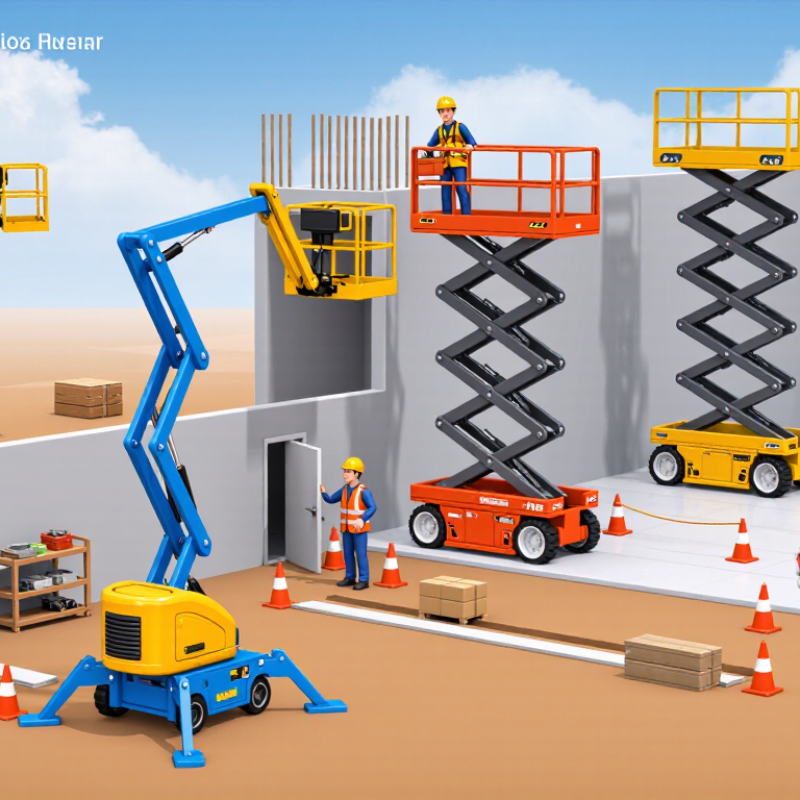
Choose a boom lift by measuring the work, not by guessing from the building’s height. Record the platform height needed to reach the task, then check how the rental provider defines “working height”; specifications can use different conventions. Measure the horizontal distance from where the lift can safely stand to the work point. A wall, roof edge, or planted strip may force the machine farther back than expected. Measure twice.
Map the access path from delivery point to setup area. Note gate width, overhead branches, tight turns, soft ground, and slopes. A lift that reaches the work may still be too wide to pass through a side gate. Check the machine’s transport dimensions and ground requirements against the actual route, not a rough visual estimate. Small details matter.
Leave room to reposition, and consider whether the platform must reach over obstacles or work around a corner. A straight-line distance often understates the reach required. It is easy to underestimate this when the site looks open on a drawing. Walk the route, mark the setup position, and confirm the lift’s reach chart and site conditions with the rental provider before booking.
How to Choose the Right Boom Lift Rental?
Choose Articulating or Telescopic Booms for Obstacles and Straight-Line Reach
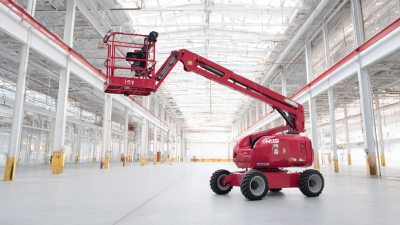
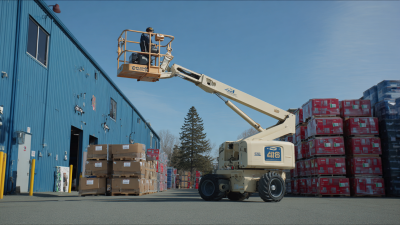
An articulating boom lift bends at one or more joints, helping the platform reach over a pipe rack, roof edge, or machine. It suits jobs where workers must move up, across, and then up again. A telescopic boom extends in a straighter line, making it useful when the work area is open and the platform needs farther horizontal reach. Check the lift’s working envelope and platform capacity, not just its maximum height. Those numbers can change with the load and boom position.
Tips: Sketch the obstacle and target area before renting. Measure the ground-to-work height and the horizontal distance. Leave room for the lift’s base and turning path. A quick site walk can catch a tight gate or low beam.
Look at the ground, too. A long-reach machine may not fit where you need to position it, while an articulating model can need more room to maneuver than expected. Compare the site measurements with the rental provider’s specifications, and ask about slope limits, tire type, and required setup space. A small planning miss can mean moving the machine twice. I’ve found that the reach chart is easy to overlook when a job seems straightforward, so check it before choosing. Have a qualified operator review the controls and site conditions before work begins.
| How to Choose the Right Boom Lift Rental? — Choose Articulating or Telescopic Booms for Obstacles and Straight-Line Reach | ||
|---|---|---|
| Selection factor | Articulating boom lift | Telescopic boom lift |
| Boom design | Multiple hinged sections bend at joints, allowing the platform to move up, over, and around obstacles. | A mostly straight boom extends outward in sections, providing a direct path to elevated work areas. |
| Best suited to | Work areas with overhead pipes, structural beams, machinery, or other obstacles between the lift and the task. | Open work areas where workers need to reach a distant point without navigating around obstructions. |
| Obstacle access | Strong choice when the platform must reach over or around obstacles; the boom can reposition the platform within its working envelope. | Less suited to routing around obstacles; the boom generally needs a clear, direct line to the work area. |
| Horizontal reach | Varies by model and boom position. The articulated path is useful for positioning, but its joints can limit reach compared with a similar-sized straight boom. | Often provides greater horizontal outreach in a comparable machine class, making it useful for reaching across open ground. |
| Typical platform height | Common rental models span roughly 30–150 ft (9–46 m); availability and specifications vary by model. | Common rental models span roughly 40–180 ft (12–55 m); availability and specifications vary by model. |
| Platform positioning | Offers flexible up-and-over positioning for complex access routes and work close to structures. | Offers more direct positioning when the work point is at a distance and the approach is unobstructed. |
| Typical applications | Facility maintenance, work around building features, industrial inspection, and jobs with restricted access paths. | Construction framing, exterior work on open façades, bridge or site work, and tasks requiring long straight reach. |
| Ground and setup considerations | Check the lift’s operating footprint, turning space, surface conditions, and required clearance for boom movement. | Check the machine’s operating footprint and ensure there is sufficient clear space in front of the lift for the boom’s reach. |
| Before booking | Confirm platform height, horizontal outreach, lift capacity, working envelope, machine width, and whether the boom can clear the specific obstacles. | Confirm platform height, horizontal outreach, lift capacity, machine dimensions, ground conditions, and an unobstructed route to the work point. |
Choose a boom lift by its rated platform capacity, not by how many people can fit. ANSI/SAIA A92.20 sets design and safety requirements for mobile elevating work platforms. Check the exact machine’s data plate and manual before planning the load. Add the weight of every worker, tool, and material. Include harnesses, cordless tools, fasteners, and that heavy box of fittings. Small items accumulate. Do not treat the rated limit as a target. Leave room for uncertainty, and follow the manufacturer’s operating instructions.
IPAF’s Global Safety Report 2024 recorded 100 MEWP-related fatalities in 2023 across 12 reporting countries. The report covers varied incident types, not overload alone, but it underscores why planning matters. Capacity checks are one part of safe operation, not a substitute for assessing ground conditions or reach. Before rental, write down the crew and equipment expected on the platform. Compare their combined weight with the rated capacity, including any platform extension in use. Ask the rental provider to confirm the machine’s configuration. If the load estimate feels uncertain, it probably is. Recheck it when workers, tools, or materials change.
Match the total platform load—workers, tools, and materials—to the lift’s rated platform capacity.
These planning examples use assumed worker and payload weights; capacity ratings shown are illustrative, not universal specifications. Check the exact lift’s capacity plate and operator manual before rental and use. ANSI A92.20 addresses design requirements; it does not set one capacity for every boom lift.
Before booking a boom lift, walk the actual route and work area. Note slopes, ruts, loose gravel, soft soil, and tight turns. A paved entrance can lead to uneven ground behind the building. Small details matter. Ask the rental provider for the unit’s operating manual and specifications, including maximum allowable slope, ground pressure, tire type, and dimensions.
Do not treat gradeability as permission to work while elevated on a slope. Gradeability commonly describes the machine’s ability to travel on an incline in a specific, stowed condition. The permitted operating tilt may be much lower. Check the exact limits for the selected model, and use a suitable level indicator where instructed. Wet soil changes everything. Rain can soften a route that looked firm during a dry inspection.
Match the lift to the surface, not just the reach. On a finished slab, confirm its load capacity and consider concentrated wheel loads. On gravel or turf, check whether the tires and ground pressure suit the site; mats may help only when approved for the machine and conditions. Measure twice. It is easy to underestimate a slope by eye, and a quick site check can miss a weak edge or hidden drain. Recheck conditions on delivery, especially after rain or site work.
Choosing a boom lift starts with the work area, not just the required platform height. Map overhead lines before selecting a machine, then check where the boom, platform, tools, and workers could move. For lines rated 300 to 50,000 volts, OSHA generally requires at least 10 feet of clearance. Treat that distance as a minimum, not a target to work right beside. Higher voltages may require greater clearance.
Ask the utility to confirm line voltage when it is unknown. A quick visual estimate is not enough. Keep the lift and everyone in the platform outside the clearance zone, including during repositioning. If the job cannot maintain that space, stop and consult the utility and a qualified safety professional about suitable controls. De-energizing or insulating lines must be handled by authorized parties, not improvised on site.
When comparing rentals, consider horizontal reach and the lift’s footprint as well as platform height. A compact machine may fit a narrow work zone, but its position still needs to preserve clearance. Check ground firmness, slope limits, and the planned travel path before delivery. It is easy to overlook the route. That can mean choosing a lift that reaches the task but cannot be safely placed.