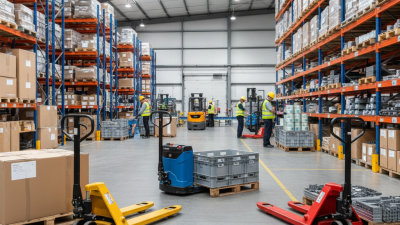
Choosing the right Manual Pallet Jack begins with the worksite, not the product label. A busy warehouse needs dependable movement, controlled steering, and comfortable handling throughout a long shift. A small retail backroom may need a lighter frame and a shorter turning radius. These differences matter.
Material-handling consultant David Mercer often tells buyers, “The best pallet jack is the one that matches the load, floor, and operator.” That advice sounds simple. It is easy to ignore. A 5,500-pound capacity model may appear safer, yet it can feel bulky in narrow aisles. A compact model may turn beautifully, but its wheels can struggle over damaged concrete.
Look closely at the load dimensions, pallet entry height, and average travel distance. Measure aisle width with the pallet loaded, not empty. Check whether polyurethane, nylon, or rubber wheels suit the floor. Polyurethane wheels roll quietly and resist many marks. Nylon wheels may perform better on smooth surfaces. Rubber wheels can offer useful grip, though they may create more rolling resistance.
Handle height and pump effort deserve practical testing. Ask an operator to move a loaded pallet, stop, reverse, and turn. Watch their wrists and posture. Small discomfort becomes expensive over time. I have seen buyers focus on capacity while overlooking steering space.
There is no perfect Manual Pallet Jack. Selection involves trade-offs. Confirm the warranty, replacement parts, service support, and training guidance before ordering. A careful choice reduces product damage, operator fatigue, and avoidable downtime. The final decision should reflect real conditions, not showroom confidence.
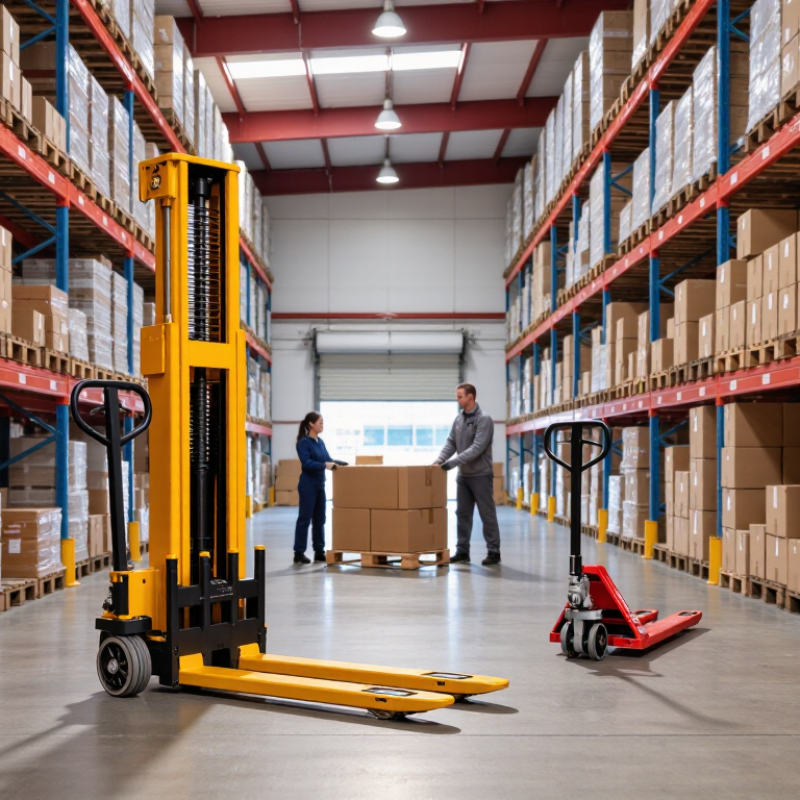
A manual pallet jack should match your actual load, not an ideal warehouse scenario. Start by recording the heaviest pallet you move during a normal week. Include the pallet, packaging, and product weight. A small mistake here can create steering problems, damaged goods, or premature equipment wear.
Measure your pallet openings and the available aisle width. Fork length must support the load without striking the opposite side. Consider floor conditions too. Smooth concrete is predictable, while cracked surfaces and loading ramps require stronger wheels and controlled handling. In cold rooms, dust, moisture, and temperature changes may affect performance. I have found that users often focus on lifting capacity and overlook turning space. That oversight can slow every trip.
Tips:
Choosing a manual pallet jack starts with the load, not the handle color. Standard models usually carry 2,000 to 5,500 pounds, but capacity changes with the load center. A long, uneven load can exceed the safe rating sooner than expected. ANSI/ITSDF B56.1 emphasizes rated capacity, stability, and operating conditions. Check the data plate carefully. Do not guess.
Compare pallet jack types with your floor and pallet design. Standard jacks suit common wood pallets and smooth warehouse floors. Low-profile models fit pallets with limited underside clearance. Stainless or galvanized versions resist moisture and washdown areas, while rough-terrain models use larger wheels for uneven surfaces. Fork lengths commonly range from 36 to 72 inches, with widths near 20 to 27 inches. Measure the pallet openings, entry direction, aisle width, and turning space first. A 48-inch fork may support a standard pallet, but it can become awkward in a narrow aisle.
MHI’s 2024 Industry Report states that 91% of surveyed supply-chain professionals planned to increase technology investment over five years. That investment does not replace basic equipment selection. The wrong fork dimension still wastes labor. In practical checks, operators should confirm the load’s center sits between the forks and remains balanced during travel. Measure twice. I would also reconsider choosing maximum capacity automatically; a lighter jack may improve maneuverability, but only after floor conditions and workload are verified.
A manual pallet jack should turn predictably, not merely move a heavy load. During warehouse trials, I push the jack with a realistic pallet, then test tight corners and narrow aisles. The steering handle should respond without sudden swings. Check the turning radius against your route, not a showroom floor. A smooth floor can hide weaknesses. Watch the front wheels as they track around rack posts. Small drift matters.
Maneuverability depends on wheel material, frame geometry, and load balance. Larger wheels may cross thresholds more easily, while smaller wheels can feel precise on polished concrete. Neither choice is universally better. Pull the jack backward, pivot it, and park it beside a marked pallet position. If the handle strikes your legs or requires repeated correction, the design is working against the operator. Measure effort over several trips. One quick test misleads.
Operator comfort is a safety and productivity factor, not decoration. Choose a handle with a secure grip and controls reachable without twisting the wrist. Check the pump strokes, handle height, and release action while wearing normal work gloves. The jack should not force rounded shoulders or hard pulling. I have overlooked handle fatigue before; that was a useful mistake. Ask multiple operators to repeat the test. Different heights expose problems a single reviewer may miss. Record observations, load weight, floor condition, and turning space before choosing.
Choosing a manual pallet jack requires more than checking its rated capacity. Build quality affects control, durability, and operator effort during daily use. Look for a reinforced steel frame, smooth welds, protected bearings, and a handle that returns without sticking. Fork tips should remain aligned under load. A small misalignment can make pallet entry awkward and increase strain.
Safety features deserve close inspection. A reliable jack should have responsive steering, controlled lowering, and a clearly marked capacity label. Rounded fork ends can reduce impact damage near pallets and storage racks. OSHA reports that powered industrial trucks contribute to about 35,000 serious injuries annually, although this figure does not isolate manual pallet jacks. The warning remains relevant: poor load control creates real workplace risk. Choose wheels suited to the floor. Hard wheels roll efficiently on smooth concrete, while softer wheels reduce vibration on uneven surfaces.
Maintenance needs are often underestimated. Check hydraulic leaks, wheel wear, handle movement, and fork deformation on a scheduled basis. Liberty Mutual’s 2023 Workplace Safety Index identified overexertion as a leading source of serious workplace injury costs, exceeding 12 billion dollars in direct expenses during 2020. A jack that needs excessive pumping or pulling may quietly increase fatigue. I have seen teams delay wheel replacement because the jack still moves. That decision is rarely economical. ANSI/ITSDF B56.1 provides recognized safety guidance for industrial trucks, but workplace inspection habits still determine performance. Keep service records, even when repairs seem minor.
| Evaluation Dimension | What to Check | Recommended Specification or Condition | Why It Matters | Inspection Method | Selection Guidance |
|---|---|---|---|---|---|
| Load Capacity | Rated capacity of the fork assembly, frame, wheels, and hydraulic unit. | Choose a rated capacity above the heaviest expected load. Common manual pallet jacks are often rated around 2,000–5,500 lb (900–2,500 kg). | Operating near or above the rated limit can reduce control, increase wear, and create a safety risk. | Confirm the capacity marking on the equipment and compare it with the actual pallet weight. | Select a model with a practical safety margin rather than matching the load exactly. |
| Frame and Fork Build | Fork steel, weld quality, frame alignment, reinforcement, and surface protection. | Look for straight forks, consistent welds, reinforced joints, and a durable painted or coated finish without exposed corrosion. | A rigid, well-aligned frame supports smoother travel and more stable load handling. | Inspect weld beads, fork tips, entry rollers, and the underside for cracks, bending, or impact damage. | For frequent or demanding use, prioritize heavier construction and reinforced fork connections. |
| Fork Dimensions | Fork length, outside fork width, fork profile, and clearance beneath the pallet. | Match fork length and width to the pallet type. Standard pallet formats may require approximately 1,000–1,220 mm fork lengths, depending on the application. | Incorrect dimensions can prevent full pallet support or make maneuvering difficult in narrow areas. | Measure the pallets, rack openings, turning spaces, and pallet entry height before purchase. | Use shorter forks for tight spaces and longer forks only when the load and operating area require them. |
| Lift Range | Lowered fork height and maximum raised fork height. | Most standard manual pallet jacks provide a low fork height suitable for pallets and a raised height commonly around 190–205 mm. | The lift range determines whether the forks can enter the pallet and move the load without scraping or obstruction. | Check the published minimum and maximum fork heights against the pallet openings and floor conditions. | Choose a low-profile or specialized design only when the pallets require it. |
| Steering and Turning | Handle design, steering angle, turning radius, and wheel tracking. | The handle should provide comfortable leverage and controlled steering; the turning radius should suit the narrowest aisle. | Good maneuverability reduces operator effort and lowers the chance of striking racks, walls, or products. | Test steering with and without a load on the actual floor surface whenever possible. | For compact work areas, prioritize a small turning radius and responsive steering control. |
| Wheel Material | Drive-wheel and load-wheel material, diameter, bearing quality, and floor compatibility. | Polyurethane wheels are generally quieter and gentler on finished floors; nylon wheels typically roll more easily on smooth, hard surfaces and resist some chemicals. | Wheel selection affects noise, rolling resistance, floor protection, and service life. | Match wheel material and size to concrete, asphalt, tile, ramps, debris, and temperature conditions. | Choose larger wheels for uneven surfaces and softer wheels where noise and floor protection are priorities. |
| Hydraulic System | Pump smoothness, lifting consistency, lowering control, seals, and oil leakage. | The pump should raise the forks evenly and lower them gradually without sudden drops or visible fluid leakage. | A reliable hydraulic system improves load control and reduces downtime. | Operate the handle through several lift and lower cycles and inspect the cylinder and fittings. | For intensive use, select a serviceable hydraulic unit with accessible seals and replacement parts. |
| Safety Features | Controlled lowering, neutral position, handle return, wheel guards, and load stability. | Look for a clearly defined control handle, gradual lowering action, protected moving parts, and stable fork geometry. | These features help reduce pinch, crush, runaway-load, and foot-injury hazards. | Verify that the handle controls lift, neutral, and lowering functions correctly without sticking. | Do not use equipment with uncontrolled lowering, damaged guards, bent forks, or failed controls. |
| Operator Ergonomics | Handle height, grip comfort, pumping effort, and control layout. | The handle should allow a neutral working posture, with controls reachable without releasing the grip. | Reduced pushing and pumping effort can help limit fatigue during repeated handling. | Test the jack with a representative load and observe posture, grip, and required force. | For high-use operations, consider models with ergonomic grips and lower rolling resistance. |
| Maintenance Requirements | Grease points, wheel access, hydraulic serviceability, fasteners, and replacement parts. | Prefer accessible lubrication points, replaceable wheels, standard seals, and clear maintenance instructions. | Simple maintenance helps preserve performance and extends equipment service life. | Check whether wheels, bearings, bushings, and hydraulic components can be serviced without specialized equipment. | Choose a design with readily available wear parts and documented inspection intervals. |
| Operating Environment | Temperature, moisture, dust, chemicals, ramps, and floor condition. | Use corrosion-resistant finishes and suitable wheel materials for wet, cold, dusty, or chemically exposed areas. | Environmental conditions can accelerate corrosion, damage seals, and increase rolling resistance. | Review the worksite conditions and any cleaning chemicals used around the equipment. | For washdown or corrosive areas, select compatible materials and follow the equipment's limitations. |
| Inspection and Service Plan | Daily checks, periodic lubrication, wheel inspection, hydraulic inspection, and load testing. | Before use, check forks, wheels, handle controls, leaks, and visible damage; follow the maintenance schedule supplied with the equipment. | Routine inspections identify defects before they affect safety or productivity. | Keep inspection records and remove damaged equipment from service until repaired. | Choose a pallet jack that your team can inspect, maintain, and repair consistently. |
| Best-Fit Application | Frequency of use, load weight, travel distance, aisle width, and floor type. | Match the jack to the actual workflow rather than selecting solely by purchase price. | The correct configuration improves safety, operator comfort, and total operating cost. | Document the heaviest load, daily operating hours, travel distance, and tightest maneuvering area. | For occasional light use, a standard model may be sufficient; for continuous or harsh use, select a reinforced, serviceable design. |
Choosing a manual pallet jack starts with total cost, not sticker price. List purchase price, freight, setup, maintenance, spare parts, and expected downtime. A low-cost frame may need more repairs on cracked concrete. That difference appears slowly. It still matters. Measure your real loads, aisle width, turning frequency, floor condition, and daily travel distance. A 2,500-kilogram load moved ten times daily demands different wheels than occasional light staging. The 2024 MHI Annual Industry Report surveyed more than 1,700 supply-chain professionals. It identifies workforce availability and operating resilience as persistent concerns. That supports a simple buying test: reduce avoidable effort without paying for unused features. I would challenge my own estimate here; repair frequency is often guessed, not measured.
Warranty value depends on coverage, exclusions, and response time. Ask whether it covers the hydraulic pump, welds, wheels, and handle assembly. Confirm whether seals and wheels are treated as wear items. A three-year warranty with slow parts may cost more than a one-year warranty with nearby service. Record service calls, lost hours, and replacement parts in a basic ownership spreadsheet. The Liberty Mutual Workplace Safety Index 2023 estimated that overexertion involving outside sources created $12.5 billion in direct U.S. workers’ compensation costs in 2020. A pallet jack is not the only cause, but poor steering or rolling resistance can increase physical demand. Test a loaded unit on your actual floor. Listen for pump leaks. Check handle return and lowering control. Then compare five-year cost per working day, not just purchase price. The result may surprise you.