How to Choose the Right Mini Final Drive in 2026?
Choosing the right Mini Final Drive in 2026 requires more than matching a model number. The drive must suit the machine’s weight, travel speed, hydraulic flow, and working environment. A compact excavator may need high torque for muddy slopes, while a tracked carrier may prioritize smooth movement and lower heat. Small differences matter. A few millimeters can affect mounting. Incorrect pressure ratings can shorten motor life.
Begin with verified machine data, not assumptions. Check displacement, maximum pressure, port positions, bolt spacing, shaft dimensions, and brake configuration. Confirm the final drive’s compatibility with the excavator’s hydraulic system. Ask suppliers for technical drawings, test information, warranty terms, and replacement-part availability. Reliable documentation is more useful than a confident sales claim. It also helps prevent expensive installation delays.
Think about real work conditions. Dust, uneven ground, frequent reversing, and long travel cycles all influence component selection. A drive that performs well in a workshop may struggle on a rocky construction site. Maintenance history also reveals useful clues. Repeated seal failures may indicate contamination, overheating, or incorrect installation. The component may not be the only problem.
There is no perfect choice.
A careful comparison should include total operating cost, not only purchase price. In 2026, buyers may also consider efficiency, service access, and equipment electrification trends. However, newer technology is not automatically better. Measure the actual duty cycle. Review the evidence. Then choose a Mini Final Drive that fits the machine, the operator, and the work ahead.
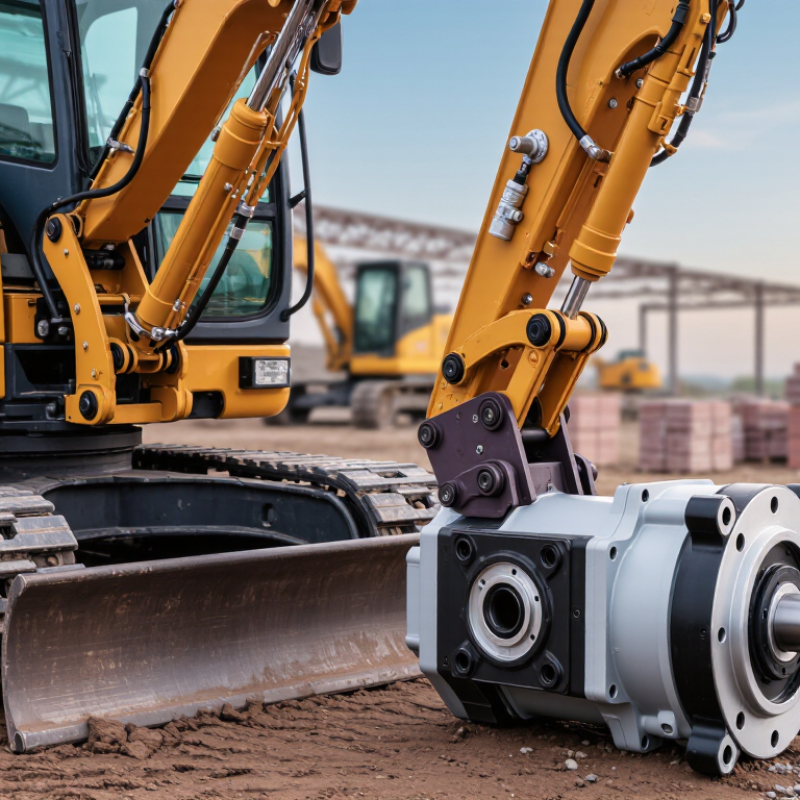
Define the Mini Final Drive and Its Role in Compact Machinery
How to Choose the Right Mini Final Drive in 2026?
A mini final drive is the compact hydraulic transmission that turns motor torque into track movement. It combines a hydraulic motor, planetary gears, bearings, and a reduction housing. In a mini excavator, it controls travel speed, pushing force, and turning response. Think of it as the machine’s final handshake with the ground. Without suitable reduction, a small machine may move quickly but lose climbing power.
Compact machinery demand is expanding. Grand View Research valued the global construction equipment market at about USD 208 billion in 2023. Its report also forecasts continued growth through 2030. Research and Markets identifies mini excavators as a strong equipment segment, supported by urban construction and rental activity. These figures do not prove every final drive will perform well. They show why correct sizing matters.
In field inspections, I check torque, displacement, reduction ratio, mounting dimensions, and hydraulic pressure first. A drive rated only by machine weight can mislead. Two excavators with similar weights may need different torque outputs.
Mud increases resistance. Steel tracks add rotating mass. A useful selection also considers relief-valve settings, duty cycles, and available service space. Look for sealed bearings and practical drain access. Small details matter.
Some specifications remain unclear.
That deserves scrutiny. Supplier data may use different test conditions, making comparisons imperfect. Confirm continuous torque, peak torque, planetary-stage design, and thermal limits before purchase. A slightly slower drive may deliver better control, longer gear life, and safer operation on slopes.
Match Final Drive Specifications to Machine Requirements
How to Choose the Right Mini Final Drive in 2026?
Matching final drive specifications to machine requirements starts with real operating conditions. Measure machine weight, travel speed, sprocket size, hydraulic flow, and working slope. A compact excavator working on wet clay needs different torque from one operating on paved sites. Check continuous and peak torque separately. Peak torque only lasts briefly. Continuous torque protects the motor during long travel.
The 2024 Global Construction Equipment Market review by Off-Highway Research highlights continued demand for compact equipment in urban and restricted work areas. This trend increases pressure on final drives to deliver compact dimensions, low noise, and dependable thermal performance. The U.S. Department of Energy’s Industrial Motor Systems Market Assessment also estimates that motor-driven systems use about 25% of U.S. electricity. Efficiency is not a small detail. Yet, a perfect specification sheet can still fail in mud. Seal quality, oil temperature, and installation alignment deserve equal attention.
Tips: Compare the required flow with the drive’s rated flow, not its maximum figure. Keep at least 10% torque reserve for slopes and sudden resistance. Confirm reduction ratio before choosing travel speed. Ask for test data under heat, shock loading, and contaminated conditions. These details often expose weaknesses earlier than catalog numbers. I would also recheck the calculation after six months. Operators may carry heavier attachments than planned, and the original assumption may no longer fit.
How to Choose the Right Mini Final Drive in 2026? - Match Final Drive Specifications to Machine Requirements
| Machine Class | Typical Machine Weight | Recommended Hydraulic Flow | Working Pressure | Required Output Torque | Typical Reduction Ratio | Approx. Travel Speed | Common Application |
| Micro excavator | 0.8–1.8 t | 15–30 L/min | 180–210 bar | 1.0–2.5 kN·m | 1:45–1:60 | 2.0–3.5 km/h | Landscaping, utility work, narrow-access excavation |
| Compact mini excavator | 1.8–3.5 t | 25–50 L/min | 200–250 bar | 2.0–4.5 kN·m | 1:45–1:65 | 2.5–4.5 km/h | General excavation, grading, trenching |
| Heavy mini excavator | 3.5–6.0 t | 40–75 L/min | 220–280 bar | 4.0–8.0 kN·m | 1:50–1:70 | 3.0–5.0 km/h | Road repair, site preparation, heavier digging |
| Tracked loader or carrier | 2.0–5.0 t | 35–70 L/min | 200–250 bar | 3.0–7.0 kN·m | 1:35–1:55 | 4.0–8.0 km/h | Material handling, site cleanup, ground preparation |
| Compact drilling or boring machine | 1.5–4.0 t | 25–60 L/min | 200–280 bar | 2.5–6.0 kN·m | 1:45–1:70 | 1.5–4.0 km/h | Ground drilling, anchoring, utility installation |
| Crawler transport carrier | 3.0–8.0 t | 45–90 L/min | 220–300 bar | 5.0–10.0 kN·m | 1:40–1:65 | 3.0–7.0 km/h | Aggregate transport, forestry, construction logistics |
Selection checklist: Confirm the hydraulic motor type, available flow, continuous and peak pressure, mounting dimensions, sprocket or hub configuration, track pitch, brake capacity, travel-speed requirement, and machine operating weight before ordering. The values above are typical engineering ranges for preliminary selection; the final drive supplier should verify the complete application duty cycle.
Compare Motor Type, Torque, Speed, and Displacement
How to Choose the Right Mini Final Drive in 2026?
Choosing a mini final drive starts with the motor type. Hydraulic motors suit excavators working in mud, heat, and changing loads. Electric motors fit compact machines with controlled power and quieter operation. The machine’s existing system matters most. Check available pressure, flow, voltage, and cooling capacity before comparing products. I have seen mismatched motors overheat quickly, even when their rated power looked sufficient.
Torque determines whether the drive can start, climb, or turn under load. Compare continuous torque with peak torque, not peak torque alone. A crawler moving on wet soil may need higher starting torque than its travel speed suggests. Speed affects productivity and control. Too much speed can reduce low-speed stability. Too little speed may leave the machine struggling between work areas.
Displacement links hydraulic flow to motor speed. Larger displacement usually increases torque but lowers rotational speed at the same flow. As a practical check, calculate expected speed from flow and displacement, then allow for efficiency losses. Measure actual pressure during operation, not only the value listed in a manual. This step is easy to skip. It should not be. Leave room for shock loads, uneven ground, and imperfect maintenance, because real jobsite conditions rarely match laboratory figures.
Verify Fit, Hydraulic Compatibility, Durability, and Serviceability
How to Choose the Right Mini Final Drive in 2026?
Fit verification should begin with measurements, not photographs. Check bolt spacing, flange diameter, shaft length, pilot size, and track width. A few millimeters can cause costly misalignment. The 2024 Association of Equipment Manufacturers market outlook identifies compact equipment as a major replacement segment, but model variation remains wide. Confirm the original reduction ratio and load rating before ordering.
Hydraulic compatibility matters just as much. Compare displacement, maximum continuous pressure, peak pressure, flow range, port position, and case-drain requirements. ISO 4406:2021 classifies hydraulic cleanliness by particle counts, such as 18/16/13. New oil is not automatically clean enough. Flush the circuit and inspect the return filter.
Durability depends on more than rated torque. Look for proven seal protection, bearing capacity, heat management, and corrosion resistance. A 2023 fluid-power maintenance review from the International Fluid Power Society identified contamination control as a recurring reliability concern. Serviceability also deserves attention. Can technicians replace seals without removing half the undercarriage? Can they check oil level easily? I have seen perfectly matched drives fail after neglected flushing. That part is uncomfortable. Recheck the supplier’s test data, warranty conditions, and spare-part lead time. A cheaper drive may become expensive when downtime reaches one working day.
Assess Suppliers, Total Cost, Warranty, and 2026 Buying Priorities
Choosing a mini final drive in 2026 requires more than matching bolt holes. A reliable selection starts with operating data: machine weight, travel speed, hydraulic flow, working pressure, terrain, and duty cycle. Ask suppliers for verified performance curves, dimensional drawings, seal materials, and test procedures. I prefer suppliers that explain limits clearly, including heat buildup during repeated slope work. A confident answer is useful. A vague promise is not. Check production experience through reference projects, inspection records, and responsive technical support. Request a sample inspection report before placing a large order.
Purchase price can hide expensive downtime. Compare delivered cost, freight, installation labor, oil, filters, service intervals, and replacement seals. A lower-priced unit may need adapters or arrive with incomplete fittings. That small detail can stop a machine for days. Calculate cost per operating hour over three to five years. Include inventory carrying costs and emergency shipping. The cheapest quote is often only cheap on paper. Maintenance time is not free, although many budgets treat it that way.
Read warranty terms line by line. Confirm coverage period, exclusions, claim evidence, response time, and return freight responsibility. A useful warranty should connect to serial traceability and documented installation. For 2026 purchases, prioritize efficiency, compact dimensions, parts availability, corrosion resistance, and predictable lead times. Ask whether critical components are stocked locally. Do not ignore noise and heat. Operators notice both quickly. Score suppliers with weighted criteria, then revisit those scores after field testing. The first decision may still be wrong. A short pilot order can protect a larger investment.
How to Choose the Right Mini Final Drive in 2026
A practical 2026 buying benchmark that balances supplier capability, total cost of ownership, warranty coverage, delivery reliability, and technical support. Use these weights as a starting point when comparing quotations and field requirements.
The recommended priority is to evaluate quality and supplier capability before focusing only on purchase price. A longer warranty, dependable delivery, and accessible technical support can reduce downtime and improve the final drive's total operating value.
 Skip to content