Skip to content

What Are Fiberglass Drill Bits Used For?

Fiberglass Drill Bits are selected for a specific challenge: cutting clean holes through brittle, layered material without creating excess heat or fraying. A bit that works well in wood may leave chipped fibers or a rough exit edge in a fiberglass panel. The difference shows up around the hole, where a fuzzy rim can weaken a neat finish.

The wider market explains why this application matters. Grand View Research valued the global fiberglass market at about US$13.1 billion in 2023 and projected continued growth through 2030. That figure covers fiberglass products broadly, not drill bits; dedicated drill-bit market data is less commonly reported. Still, fiberglass appears in boatbuilding, vehicle parts, building panels, and electrical enclosures. Each use calls for controlled drilling, not brute force.

Composite-material researcher Dr. Stephen Tsai’s work emphasizes understanding a material’s structure when designing for it. The practical takeaway for drilling is simple: match the tool and technique to the laminate. Start with a sharp, suitable bit, support the panel, and use steady pressure. Test on a scrap piece when possible. Small details matter. This guide explains where Fiberglass Drill Bits are useful, what they can handle, and how to reduce splintering around the hole. It also keeps expectations realistic: bit design, panel thickness, and operator technique all affect the result. A careful setup helps. It cannot make every bit right for every fiberglass job.
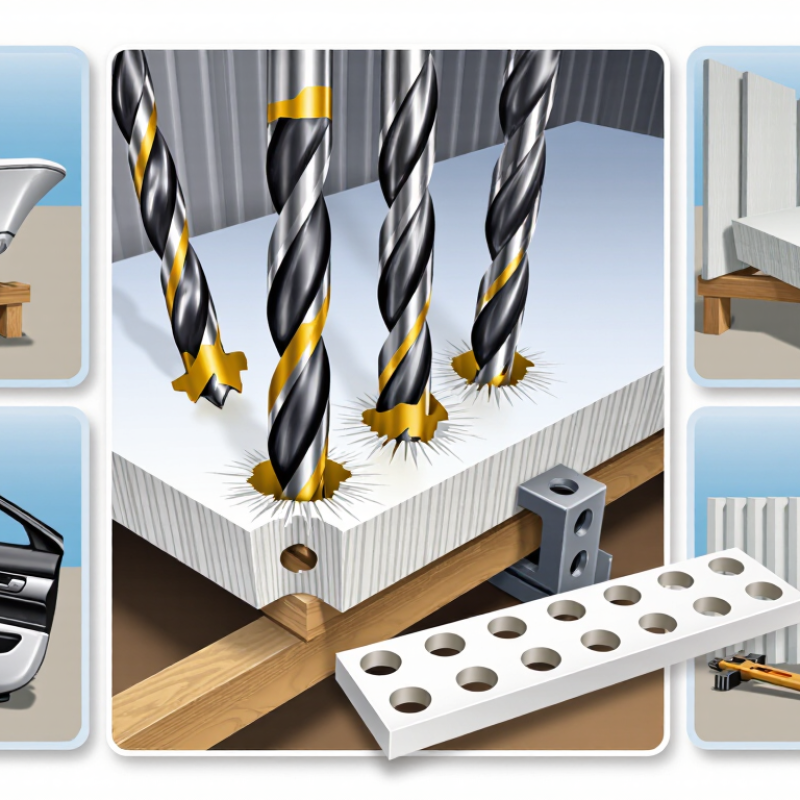
What Are Fiberglass Drill Bits Used For?

Fiberglass Drill Bit Types for GFRP, FRP, and FR-4 Materials

What Are Fiberglass Drill Bits Used For?

Fiberglass Drill Bit Types for GFRP, FRP, and FR-4 Materials

GFRP and FRP contain abrasive glass fibers that can quickly dull ordinary steel bits. For larger holes, sharp carbide-tipped or solid-carbide bits resist wear and help limit fraying. A diamond-coated bit can be useful for repeated work, though its cost may not suit occasional repairs. Choose the bit to match the laminate thickness and hole size; one type does not fit every job.

FR-4 is a glass-fiber-and-resin laminate commonly used in circuit boards. Small, accurate holes usually call for solid-carbide PCB drills, held in a machine with low runout. For thicker FR-4 panels, support the material with a backing board to reduce breakout as the bit exits. Keep the feed steady and avoid excess heat, which can damage the resin. Heat matters.

Why Abrasive Glass Fibers Wear HSS Edges Faster Than Carbide

Fiberglass is not especially hard to cut, but its glass fibers are abrasive. As a drill bit passes through the laminate, countless tiny fibers rub against the cutting edge. The resin helps hold the material together, yet it does not shield the edge from that wear. HSS, or high-speed steel, can drill fiberglass, especially for occasional holes. Its edge, however, tends to round sooner than a carbide edge. The change may be gradual. A bit that once made clean holes can begin to require more pressure and leave fuzzy edges.

Carbide resists abrasion better, so it often keeps a sharp cutting edge longer in repeated fiberglass work. That does not make every carbide bit the right choice. Carbide is hard but less forgiving of bending, vibration, or a tilted drill. A steady setup matters. Use a sharp bit, support the panel, and avoid forcing the cut; excess pressure can crack or chip a brittle laminate. Clear dust often, since fine glass particles can obscure the hole and irritate skin or lungs. A small amount of edge fuzz is not always a sign of poor technique, either. Fiberglass varies in thickness and resin content, so results can be less tidy than expected. Inspect the hole and the bit, rather than judging by drilling time alone.

Point Geometry Compared: 118° Standard and 135° Split-Point Bits

Fiberglass drill bits are used to make holes in reinforced panels, covers, and laminated parts. Fiberglass is abrasive, and its resin can chip as a bit exits. A sharp bit and steady support matter as much as point geometry. The point angle affects how readily the bit starts and how much it wanders.

A 118° standard point is a versatile choice for general drilling. Its chisel edge may skate across a smooth surface, so mark the hole carefully and start with light pressure. A 135° split point has edges that help it bite sooner and reduce walking, often with less pushing. It can be useful on slick or thin panels, but it will not prevent every chip. Not a guarantee. The best choice depends on the laminate, bit sharpness, and support behind the work.

Tips: Place scrap wood behind the panel to support the exit side. Drill at a controlled speed and avoid forcing the bit; excess heat can damage resin. Wear eye protection and manage fiberglass dust. It is tempting to assume 135° always makes a cleaner hole, but the result still depends on technique.

How to Match Drill RPM and Feed Rate to Bit Diameter and Laminate

Fiberglass drill bits are used for glass-fiber laminates, where clean holes matter as much as speed. Match spindle speed to bit diameter, not just the drill’s top setting. Using the cutting-speed equation in ISO 3002-1, a 6 mm bit at 60 m/min turns at about 3,180 rpm; a 3 mm bit needs about 6,370 rpm for the same surface speed. These figures are setup examples, not universal settings. Davim’s review of fiber-reinforced polymer machining in Materials & Design (2009, vol. 30, pp. 265–278) describes how cutting conditions affect heat, tool wear, and laminate damage.

Feed rate should be set as feed per revolution multiplied by RPM. For example, 0.08 mm per revolution at 3,180 rpm gives roughly 254 mm/min. Begin conservatively, then inspect the hole’s exit side for fuzzing or delamination. A thin glass/epoxy panel may need lighter feed than a thick, resin-rich laminate. Keep the panel supported, use a sharp bit, and clear dust often; fiberglass dust can irritate skin and lungs. Too much pressure can split the exit ply. Too little may rub and heat the resin. That balance is imperfect, and worth checking on a scrap offcut before drilling the finished panel.

What Are Fiberglass Drill Bits Used For? - How to Match Drill RPM and Feed Rate to Bit Diameter and Laminate
Bit Diameter Typical Starting RPM Typical Feed Rate Suitable Work Setup and Quality Notes
0.8–1.5 mm
(0.031–0.059 in)
12,000–20,000 rpm 250–700 mm/min
(10–28 in/min)
Small holes in thin glass-fiber-reinforced plastic (GFRP) panels and fiberglass circuit-board laminates. Use a sharp solid-carbide bit and a rigid spindle. Support the laminate closely to reduce breakout; avoid excessive feed that can snap a small bit.
1.6–3.0 mm
(0.063–0.118 in)
7,000–14,000 rpm 250–800 mm/min
(10–31 in/min)
General-purpose holes in thin-to-medium GFRP sheets, panels, and laminated parts. Keep the work firmly clamped. A backup plate can help limit exit-side splintering, especially in thin or brittle laminates.
3.1–6.0 mm
(0.122–0.236 in)
3,500–8,000 rpm 200–700 mm/min
(8–28 in/min)
Medium and larger holes in solid fiberglass panels or glass-fiber laminates. Use a bit geometry intended for composites where possible. Clear chips and dust; reduce heat buildup rather than allowing the bit to rub.
6.1–10.0 mm
(0.240–0.394 in)
2,000–4,500 rpm 150–500 mm/min
(6–20 in/min)
Larger clearance or mounting holes in thicker GFRP components. Check the bit maker’s limits and machine rigidity. For deep holes, use short peck cycles or withdraw periodically to clear dust and chips.
How to use these ranges: These are starting ranges for a rigid CNC setup using sharp solid-carbide bits; they are not universal settings. Actual results depend on bit geometry, laminate resin and fiber content, thickness, tool condition, and machine rigidity. Start with a test hole and adjust to limit fraying, delamination, heat, and bit wear. Fiberglass dust can irritate skin and lungs: use effective dust extraction and suitable personal protective equipment. Follow the bit and machine manufacturers’ instructions.

Hole Quality and Safety: Backing Support, Dust Control, and PPE

What Are Fiberglass Drill Bits Used For?

When drilling fiberglass-reinforced panels, hole quality depends on support as much as bit choice. Clamp the work firmly, then place a scrap plywood backer beneath the exit side. This reduces breakout and catches the bit as it passes through. Use steady pressure and moderate speed; excessive heat can soften resin and leave a ragged edge. Stop and inspect the hole. A sharp edge can still splinter.

Drilling can release irritating glass fibers and resin dust. Use local extraction with a HEPA-filtered vacuum near the bit, and clean settled dust with a damp cloth. Avoid blowing dust away with compressed air. NIOSH’s Pocket Guide to Chemical Hazards lists a recommended exposure limit of 3 fibers/cm³ for fibrous-glass fibers longer than 5 μm. It also lists 5 mg/m³ for total dust. These are exposure references, not a guarantee that any level is harmless.

Wear safety glasses with side protection, gloves, and long sleeves to limit eye and skin irritation. Choose a respirator suited to the task and workplace assessment; facial hair can weaken its seal. Keep extraction running after drilling, since dust may linger around the cut. The backer helps, but it does not replace dust control. I would check both faces of the panel, because a smooth entry can hide a rough exit.