China Top 10 Silica Tubing Manufacturers You Should Know
Silica Tubing supports demanding work in semiconductor processing, analytical laboratories, lighting, and high-temperature equipment. Buyers often focus on purity, dimensional consistency, thermal performance, and delivery reliability. Those details matter at the bench: a small bore variation can affect flow, while surface defects may complicate cleaning or assembly.
The U.S. Geological Survey’s Mineral Commodity Summaries 2024 estimated U.S. industrial sand and gravel output at about 120 million tons in 2023. This figure provides useful upstream context, but it does not measure silica tubing production or sales. That distinction matters. Public industry reports often group tubing with wider silica or quartz product categories, so precise supplier comparisons can be difficult.
This guide introduces ten manufacturers and considers their product range, stated material specifications, customization options, and quality information. Where available, buyers should verify composition, tolerances, inspection methods, and application suitability directly with each supplier. A polished catalog is helpful, but it cannot replace a technical datasheet or a sample evaluation. There is no single best tube for every process. The list is a starting point, not a certified ranking or endorsement, and supplier capabilities can change. One limitation remains: publicly available data may not reveal production capacity or independent defect rates.
What Silica Tubing Is and How It Is Used
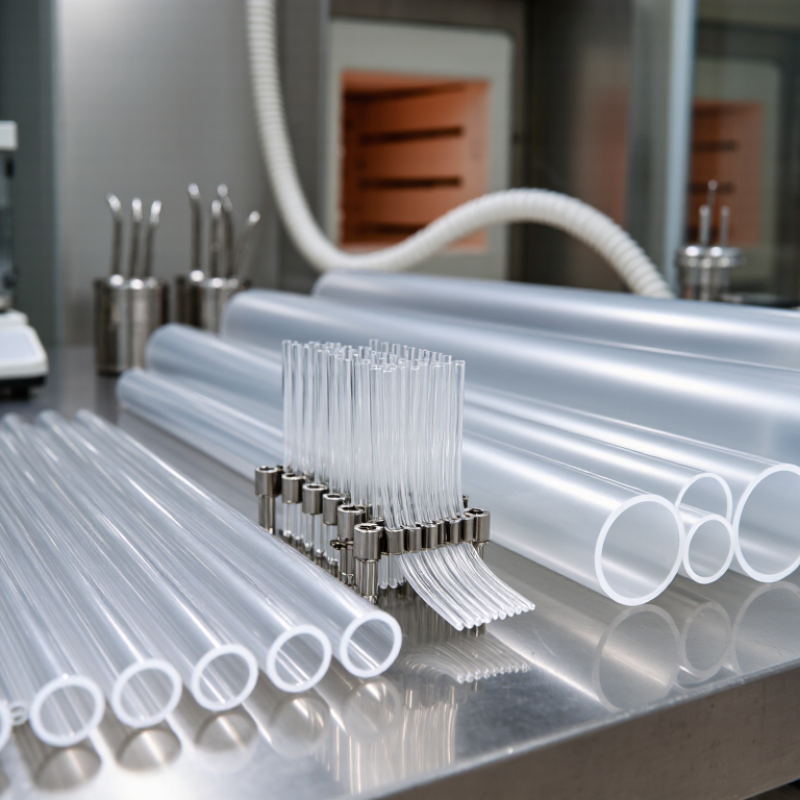
Silica tubing is a hollow tube made from high-purity silicon dioxide, often in fused form. Unlike common glass, it can tolerate higher temperatures and expands very little when heated. Depending on its grade and wall thickness, it can also transmit ultraviolet light. It behaves differently. These properties matter when equipment needs heat resistance, optical access, or low contamination.
In laboratories, narrow silica tubes carry gases or liquids through analytical instruments and may serve as sample cells or furnace liners. Industrial systems use them to guide hot gases, protect sensors, or provide a clear path for light near a process. A technician may check a tube under a bench lamp for chips, cloudy patches, or rough ends before installation. Small details matter. Silica is hard but brittle, so a sharp bend or side load can cause a sudden break.
Selecting tubing involves checking its inner and outer diameters, wall thickness, operating temperature, chemical exposure, and bend radius. The right dimensions depend on flow and pressure, not appearance alone. A thinner wall may improve heat transfer but leave less room for handling errors. In practice, a specification sheet rarely tells the whole story: connectors, thermal cycling, and installation stress can affect service life. Testing the assembly under realistic conditions can reveal problems early.
Ten Chinese Silica Tubing Manufacturers to Know
Ten Chinese silica tubing manufacturers to know should be compared by process control, not catalogue breadth alone. Silica tubing serves demanding applications where wall thickness, bore diameter, purity, and thermal stability matter. Ask for tolerances and batch inspection records. Small variations can complicate assembly.
The U.S. Geological Survey’s Mineral Commodity Summaries 2024 estimated U.S. industrial sand and gravel production at about 120 million metric tons in 2023. This is a useful raw-material indicator, not a measure of tubing output. That distinction matters. Supplier checks should include material traceability, dimensional reports, and sample testing under the intended temperature cycle. Request clear data on breakage rates and packaging, too. A polished sample tells only part of the story. Comparisons remain imperfect when manufacturers use different test methods; buyers should align specifications before reviewing quotes. A careful shortlist can reveal meaningful differences in consistency, lead times, and technical support.
How Their Products and Capabilities Compare
Comparing ten silica-tubing manufacturers means looking beyond headline purity claims. Check outside diameter, wall thickness, concentricity, and length tolerances against your process drawings. For high-temperature furnaces, thermal-shock resistance and consistent wall geometry matter at the hot zone, where uneven heating can cause premature failure. For fluid handling, inspect surface finish, bore cleanliness, and whether custom bends introduce stress. Ask how each supplier tests and documents these properties. That matters.
Capacity is another dividing line. Some producers focus on standard tubing and repeatable volume; others offer small-batch dimensions, drawn-to-order sections, or tighter inspection records. SEMI reported that global semiconductor-materials sales reached 67.5 billion dollars in 2024, reflecting strong demand across a sector that uses high-purity materials. This figure is not silica-tubing sales, so it should not be treated as a direct market ranking. Rankings can mislead. Catalogs rarely show real-world yield, lead-time variation, or how promptly a supplier resolves out-of-tolerance parts. Compare sample inspection reports, lot traceability, and delivery records alongside specifications. A slightly awkward point: the lowest stated impurity level may not improve performance if the tubing’s dimensions drift between batches. Request comparable test data before deciding.
China Top 10 Silica Tubing Manufacturers: Material Capability Benchmark
A material-level comparison of typical thermal expansion coefficients—not a manufacturer ranking. Lower expansion generally means less dimensional change during temperature shifts.
Typical approximate coefficients of thermal expansion (20–300°C): fused silica, 0.55; borosilicate glass, 3.3; soda-lime glass, 9.0 × 10⁻⁶/K. Actual values vary with glass composition and product specifications.
What to Consider When Choosing a Manufacturer
Choosing a silica tubing manufacturer requires more than comparing prices and lead times. Check the tube’s outer diameter, wall thickness, concentricity, and straightness against your application’s tolerances. Ask for batch-level inspection records, not just a sample certificate. Small differences matter. The USGS Mineral Commodity Summaries 2024 estimated U.S. industrial sand and gravel production at 120 million metric tons in 2023. That figure describes a broad feedstock market, not tubing quality; it is a reminder to verify the manufacturer’s silica grade and traceability directly.
Request material composition, operating-temperature limits, and test methods in writing. For thermal processes, NIST reference data place fused silica’s thermal expansion near 0.5 parts per million per kelvin at room temperature, but actual performance depends on material and conditions. Ask how each batch is measured, and whether the supplier can provide dimensional results and representative test data. Inspect packaging details too: capped ends and clean, separated tubes reduce the chance of chips or contamination during shipment. Ask for proof. A polished audit file can still miss variation between batches, so compare documents with trial samples and your own measurements before committing to volume orders.
 Skip to content