What Are the Top Air Conditioner Parts for Global Buyers?
Choosing the right Air Conditioner Parts can determine cooling performance, operating costs, and service life. Global buyers often compare compressors, condenser coils, fan motors, capacitors, filters, thermostats, and control boards. Each component affects the system differently. A weak capacitor may cause difficult starts, while a clogged filter can reduce airflow within days.
This guide examines the parts most commonly purchased across residential, commercial, and light industrial markets. It considers compatibility, material quality, energy performance, packaging, lead times, and after-sales support. A compressor designed for a tropical climate may not suit a cold warehouse. Voltage, refrigerant type, mounting dimensions, and control protocols also require careful checking. Small differences matter.
Details matter most.
Reliable sourcing requires more than comparing prices. Experienced buyers usually request datasheets, batch information, test records, and clear warranty terms. They also confirm whether replacement parts match the original manufacturer’s specifications. Recognized certifications can support confidence, but they should not replace practical inspection. Even trusted suppliers may provide incomplete product information. That is an uncomfortable possibility. Buyers should verify claims through samples, technical questions, and documented communication.
This overview is designed to help international purchasers build a more dependable shortlist. It highlights practical selection points rather than promising one universal solution. Climate, equipment age, maintenance habits, and local installation skills can change the best choice. A part that performs well in one market may disappoint in another. Careful evaluation remains essential.
What Are the Main Categories of Air Conditioner Parts?
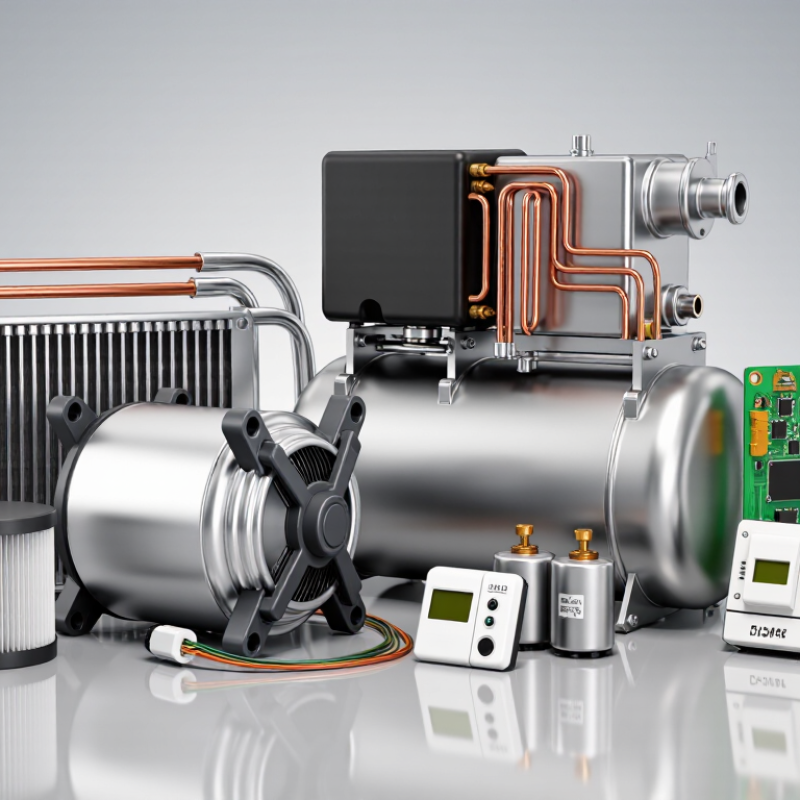
For global buyers, air conditioner parts usually fall into six practical categories: compression, heat exchange, airflow, electrical control, filtration, and installation hardware. Compressors move refrigerant through the system. Heat exchangers include indoor evaporator coils and outdoor condenser coils. Fans, motors, and blades distribute air across those coils. Control boards, sensors, capacitors, and contactors manage temperature, safety, and power. Filters protect indoor air paths, while valves, copper tubing, insulation, and fittings complete the refrigerant circuit.
The International Energy Agency reported that space-cooling electricity demand could more than triple by 2050, reaching about 6,200 TWh. That projection increases the importance of reliable replacement parts. Buyers should verify voltage, refrigerant compatibility, dimensions, corrosion resistance, and operating temperature. A part may fit physically but still fail electrically. Small details matter.
The United Nations Environment Programme also emphasizes efficient cooling equipment and lower-impact refrigerants in its 2022 cooling guidance. This makes refrigerant components and variable-speed controls increasingly important categories. In practice, compressor quality often receives the most attention. That may be too narrow. A weak capacitor, blocked filter, or noisy motor can reduce system performance just as quickly.
I have found that clear serial references and test records reduce purchasing errors, although documentation is sometimes incomplete. That is a real industry weakness. Global buyers should request drawings, material specifications, efficiency data, and batch traceability before approving large orders.
Which Components Control Cooling, Airflow, and Temperature?
What Are the Top Air Conditioner Parts for Global Buyers?
Cooling starts with the compressor, which circulates refrigerant through the system. The condenser coil releases indoor heat outdoors, while the expansion valve lowers refrigerant pressure. Inside the evaporator coil, refrigerant absorbs room heat. A clean, frost-free coil usually supports better heat transfer. The fan motor then pushes cooled air through the filter and supply grille. Small parts matter.
Temperature control depends on sensors, thermostats, and the control board. These components measure room conditions and adjust compressor cycles, fan speed, and valve operation. A faulty sensor may cause short cycling, uneven cooling, or unnecessary electricity use. The International Energy Agency reports that space-cooling demand could triple by 2050 without stronger efficiency improvements. That makes reliable controls increasingly important for global buyers.
Airflow is often overlooked. A restrictive filter, weak motor, or damaged blower wheel can leave one corner warm, even when the compressor runs normally. The Global Cooling Watch 2023 also identifies rapidly growing cooling demand as a major energy challenge. Buyers should compare airflow ratings, sensor accuracy, coil materials, and service access, not only cooling capacity. Numbers can mislead. Laboratory performance may change in dusty, humid, or extremely hot environments. In practice, the best component choice depends on installation quality, maintenance habits, and local climate.
How Do Electrical and Refrigeration Parts Work Together?
Global buyers often rank compressors, control boards, capacitors, expansion valves, and heat exchangers among the most important air conditioner parts. These components must operate as one system. The compressor raises refrigerant pressure, while the condenser releases heat outdoors. The expansion valve then lowers pressure. Finally, the evaporator absorbs indoor heat.
Electrical and refrigeration parts are closely connected. A control board sends signals to the compressor, fan motor, sensors, and safety switches. A weak capacitor may prevent the compressor from starting. Incorrect sensor readings can also interrupt refrigerant flow. Small electrical faults sometimes look like refrigeration failures. That confusion increases service time and replacement costs.
The International Energy Agency’s The Future of Cooling report projects that cooling electricity demand could reach about 6,200 TWh annually by 2050. Efficient coordination matters. The UNEP Cooling Emissions and Policy Synthesis Report estimates that better efficiency and refrigerant choices could avoid up to 2.1 billion tonnes of CO2-equivalent emissions yearly by 2050. Buyers should therefore check voltage tolerance, connection standards, refrigerant compatibility, pressure ratings, and test records together. Not separately. In practice, specifications can still be incomplete, especially for replacement parts across different climates. A careful supplier should provide wiring diagrams, performance data, and traceable quality documentation before shipment.
What Should Global Buyers Check Before Choosing Parts?
Global buyers should inspect air conditioner parts beyond price and appearance. Start with exact compatibility: model series, mounting points, pipe diameter, connector type, voltage, and frequency. A control board may fit physically but fail under a different power standard. Check refrigerant requirements and local environmental rules before ordering compressors, valves, or heat exchangers. Product certificates, test reports, and material specifications also deserve careful review.
Tips: Request a sample before placing a large order. Measure the original part with a caliper, not by eye. Ask for drawings, wiring diagrams, packing details, and batch traceability. Confirm whether the supplier can provide replacement parts after installation. Keep written records of every technical requirement. Small details matter here.
Operating conditions should guide the selection. A coastal installation may need stronger corrosion protection, while a dusty workshop may require sealed electrical components. Consider ambient temperature, expected running hours, noise limits, and service access. Verify performance data under conditions similar to the final site, rather than trusting one impressive number. I once treated a matching part number as sufficient evidence; it was not. Connector differences delayed installation and increased freight costs. No checklist catches every issue, but independent inspection and functional testing reduce avoidable surprises. Supplier communication can still be imperfect, so confirm important points twice.
How Can Buyers Match Parts With Different AC Systems?
Global buyers often need compressors, fan motors, control boards, filters, capacitors, and expansion devices. The correct part depends less on appearance than system design. A compressor for a small split unit may not suit a variable refrigerant flow system. Fit comes first. Buyers should record the model number, production year, cooling capacity, refrigerant type, voltage, frequency, and phase. A clear nameplate photo can prevent an expensive mismatch.
For split and window units, compare mounting holes, pipe diameter, motor speed, and connector shape. Check whether the control board supports fixed-speed or inverter operation. These systems may look similar, yet their signals and power requirements differ. Portable units need special attention to exhaust assemblies, water pumps, and compact fan motors. In commercial systems, valves, sensors, and branch controls must match the circuit design. A part can fit physically and still fail electrically. Small errors matter.
Experienced buyers also verify operating ranges, safety approvals, and installation instructions for the destination market. Ask suppliers for datasheets, wiring diagrams, test records, and return conditions. When replacing a refrigerant component, confirm oil type and system cleanliness with a qualified technician. Do not rely on a product photo alone. Field servicing often reveals simple mistakes, such as choosing a motor with the wrong rotation direction. That error can delay commissioning and increase labor costs. A checklist helps, but it should be reviewed against the service manual. Compatibility requires documented matching between the part, system, and working conditions.
 Skip to content