Skip to content

Top China Square Bottom FIBC Suppliers for Global Buyers

Global buyers need more than a low quotation when selecting square bottom FIBC suppliers in China. They need stable dimensions, dependable lifting loops, clean stitching, and traceable quality records. A bag measuring 90 × 90 × 120 centimeters must remain consistent across repeated production runs. Even a small deviation can affect pallet stacking, filling speed, and warehouse safety. Small details matter.

David Zhang, a China-based bulk-packaging consultant, says, “A reliable supplier is measured by repeatable bags, not impressive samples.” This practical view supports the role of a China Leading Square Bottom Fibc Supplier. Strong suppliers explain fabric weight, safe working load, safety factor, liner options, and discharge designs clearly. They also provide samples before confirming large orders. Samples can mislead. Production evidence matters more.

This introduction examines leading Chinese suppliers for global buyers. It considers manufacturing experience, inspection routines, customization ability, export communication, and delivery performance. Useful evidence may include batch records, material certificates, seam testing, and independent inspection reports. Buyers should also confirm whether products match their industry requirements and destination-market rules. No supplier is perfect. Communication gaps, changing lead times, or inconsistent color control can still appear. Careful evaluation reduces those risks. The best partnership develops through transparent specifications, realistic timelines, and corrective action when something goes wrong. That standard is demanding, but it protects products, workers, and long-term commercial trust.
Top China Square Bottom FIBC Suppliers for Global Buyers

What Square Bottom FIBC Bags Are and Why Global Buyers Choose Them

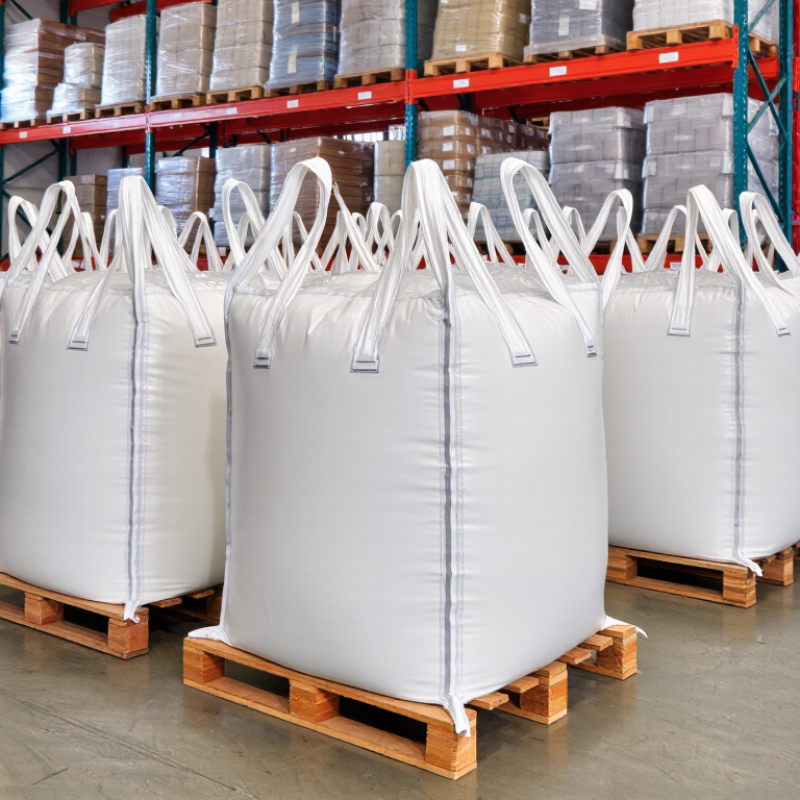
Square bottom FIBC bags are flexible bulk containers with a flat, box-like base. Unlike standard bulk bags, they can stand upright when filled. This shape improves pallet stability, storage efficiency, and loading control. Many global buyers choose them for powders, granules, minerals, agricultural materials, and other approved dry goods. Their woven polypropylene fabric supports heavy loads while keeping handling practical.

From factory inspections and packaging trials, I have found that construction details matter more than appearance. Buyers should check fabric strength, seam quality, lifting-loop design, liner compatibility, and discharge options. A well-designed square base can reduce shifting during transport. It may also improve warehouse space use. However, the design is not perfect for every product. Moisture sensitivity, sharp particles, or uneven filling can still create problems. Testing with the actual material remains essential.

Tips: Request load tests, drop tests, and dimensional samples before ordering. Confirm the safe working load, safety factor, and certification documents. Ask for production photos and batch inspection records. A reliable supplier should explain limitations clearly, not promise universal performance. Small details, such as loop spacing and outlet protection, can affect unloading speed. Do not judge quality from fabric color alone.

Key Specifications for Evaluating Chinese Square Bottom FIBC Suppliers

China remains a major sourcing base for square bottom FIBC bags, but price alone is a weak screening tool. Grand View Research’s 2024 FIBC assessment valued the global market at about US$7 billion in 2023, with steady growth expected through 2030. That growth increases supplier competition and quality variation. Buyers should verify safe working load, safety factor, fabric weight, bag dimensions, and filling stability. For a 1,000-kilogram bag, a documented 5:1 safety factor is often more meaningful than a low quotation. Request tensile-test results, seam-strength records, and batch traceability.

Construction details deserve close inspection. Check whether the polypropylene fabric is coated, laminated, or breathable for the cargo. Confirm liner thickness, spout dimensions, lifting-loop design, and bottom-discharge control. A sample may look excellent. It can still fail after repeated handling. ASTM, ISO, and buyer-specific testing should match the intended application, not merely appear on a certificate. Smithers’ flexible packaging research highlights performance consistency, automation, and supply-chain reliability as important growth factors for FIBC producers. Therefore, evaluate production capacity, inspection frequency, calibration records, and corrective-action procedures. Ask for recent third-party test reports, factory-audit access, and a controlled pilot order. Lead time should include material procurement, testing, and port handling. A rushed shipment often hides the real risk. Suppliers should also explain how they manage recycled content, contamination control, and documentation changes. Be cautious when specifications are copied from a template; precise measurements are not always precise manufacturing.

Top China Square Bottom FIBC Suppliers for Global Buyers - Key Specifications for Evaluating Chinese Square Bottom FIBC Suppliers

Practical specification and supplier-verification matrix for square bottom flexible intermediate bulk containers.

Evaluation Dimension Recommended Specification or Benchmark Evidence to Request Buyer Verification Point
Applicable standard Manufactured and tested in line with ISO 21898 or an equivalent contractually agreed FIBC standard. Current product specification, quality manual, and test-method references. Confirm that the standard applies to the exact construction, not only to the factory generally.
Bag construction Square-bottom design with four-panel body, stable base, reinforced seams, and lifting loops suitable for the intended handling method. Engineering drawing, cross-section details, seam layout, and production sample. Check dimensional stability when filled and compatibility with pallet, rack, and discharge equipment.
Safe working load Common commercial ratings include 500 kg, 1,000 kg, 1,250 kg, and 1,500 kg; the rating must match the filling density and handling conditions. SWL label artwork, load calculation, and production test records. Verify the stated SWL against the required payload, lifting method, stacking height, and storage duration.
Safety factor A 5:1 safety factor is widely used for single-trip FIBC applications; reusable designs may require a higher factor and additional testing. Type-test report identifying safety factor, test load, test duration, and sample construction. Ensure the test sample has the same fabric, seams, loops, liner, and closure configuration as the ordered bags.
Fabric and coating Woven polypropylene fabric selected according to load, abrasion, moisture, sift-proofing, and product-compatibility requirements. Fabric GSM, denier, tensile-strength results, coating details, and incoming-material inspection records. Compare the approved fabric swatch and laboratory results with the mass-production material.
Dimensions and tolerance Typical square-bottom formats are approximately 90–115 cm wide and 90–115 cm long, with height determined by capacity and bulk density. Approved dimensional drawing, tolerance table, and inspection report. Confirm filled dimensions, pallet fit, container utilization, and clearance around lifting equipment.
Top and bottom closures Top options may include open top, duffle top, or filling spout; bottom options may include plain bottom, discharge spout, or iris closure. Closure drawings, fabric specifications, tie-cord details, and leakage-test results. Match the inlet and outlet design to filling speed, discharge equipment, dust control, and residual-product requirements.
Liner and cleanliness Use a PE or PP liner when moisture protection, fine-powder containment, or product purity requires it; liner dimensions must fit without stress. Liner material declaration, thickness, sealing method, cleanliness procedure, and sample liner. Check odor, visible contamination, pinholes, seal integrity, and compatibility with the packed material.
Electrostatic control For flammable powders or hazardous areas, specify the appropriate FIBC type and grounding or dissipative requirements after a documented risk assessment. Electrostatic test reports, grounding instructions, and material-resistance data where applicable. Do not rely on a generic “conductive” claim; verify the complete bag design and intended operating environment.
Printing and traceability Permanent identification should show SWL, safety factor, handling instructions, batch or lot reference, and relevant warnings. Artwork proof, coding procedure, label-control procedure, and sample marking. Check print legibility, barcode readability where required, and traceability from finished bag to raw materials.
Quality-control system Documented incoming, in-process, and final inspections covering fabric, dimensions, seams, closures, cleanliness, and packaging. Inspection plan, control limits, nonconformance procedure, and recent anonymized inspection records. Use an agreed pre-shipment inspection level and define acceptance criteria before purchase.
Testing capability The supply chain should support tensile, seam, toppling, stacking, drop, lifting, and leakage tests appropriate to the design. Test equipment list, calibration certificates, test procedures, and independent laboratory reports when required. Confirm calibration validity and ensure test results identify the tested construction and production batch.
Packaging and logistics Bags should be compressed or folded in a clean, dry manner, protected from moisture and UV exposure, and packed according to shipping requirements. Packing specification, carton or bale dimensions, loading plan, and storage instructions. Calculate container utilization and verify that packaging will prevent contamination and deformation during transit.
Sample and approval process Production should begin only after written approval of the drawing, material, closure details, artwork, sample, and test requirements. Golden sample, signed specification sheet, change-control procedure, and approval record. Include a written requirement that construction changes require prior buyer approval.
Important note: The dimensions, load ratings, safety factors, closure styles, and electrostatic classifications shown above are selection benchmarks rather than universal specifications. Final values must be confirmed through the approved technical drawing, product risk assessment, applicable regulations, and verified test documentation.

Leading China-Based Square Bottom FIBC Supplier Categories

Leading China-Based Square Bottom FIBC Supplier Categories

China-based square bottom FIBC suppliers commonly serve four practical categories. Standard square bottom bags support stable pallet stacking and efficient warehouse storage. Food-grade versions use controlled materials and cleaner production areas. Ventilated designs help airflow around agricultural products during storage and transport. Conductive or anti-static options suit sensitive industrial environments, when correctly specified by qualified engineers.

Experienced buyers usually compare more than price. They review fabric strength, lifting-loop design, seam quality, discharge options, and inner liner compatibility. A supplier should provide test reports, production samples, and clear inspection records. Factory experience matters because small changes can affect filling speed or bag stability. Still, a perfect specification rarely exists. I have seen strong fabric paired with weak seams, which creates an expensive lesson.

Tips: Ask for a filled sample before placing a large order. Check its base on a flat pallet. Measure height, width, and loop spacing. Confirm the safe working load and safety factor. Request photos from production, not only showroom images. Discuss moisture protection early. Even reliable suppliers may misunderstand a vague drawing. Clear measurements prevent that mistake. Keep written approval for every change.

Quality Standards, Certifications, and Production Capabilities to Compare

For global buyers, square bottom FIBC suppliers should prove more than attractive samples. Ask for technical drawings, fabric GSM, safe working load, safety factor, and tolerance ranges. A reliable specification should identify lifting loops, seams, discharge spouts, liners, and pallet compatibility. Small details matter.

Quality control should follow documented procedures, not verbal promises. Review batch records for fabric strength, seam strength, dimensions, drop testing, and UV resistance. ISO 21898 alignment is useful, while ISO 9001 certification can indicate controlled production systems. Still, a certificate alone is not proof. Confirm its scope, validity, and issuing body. For food-contact applications, request current declarations and independent migration test reports. Requirements vary by destination, so local compliance review remains necessary.

Production capability deserves equal attention. Visit, or remotely audit, fabric extrusion, circular weaving, cutting, sewing, inspection, and packing areas. Ask how operators separate approved and rejected materials. Traceable lot numbers should connect raw materials with final inspection records. In practical sourcing work, inconsistent stitching often appears after several production batches, not in the first sample. That weakness is easy to miss. Require pre-shipment inspections and retain sealed samples for comparison. Ask about monthly capacity, backup machinery, lead times, and corrective-action records. A supplier that admits limitations may be more dependable than one claiming perfection. Verify every claim.

How Global Buyers Can Select and Partner With the Right Supplier

Top China Square Bottom FIBC Suppliers for Global Buyers

Selecting a square bottom FIBC supplier requires more than comparing prices. Buyers should check production experience, material control, and export records. Ask for test reports covering safe working load, seam strength, fabric weight, and UV resistance. A reliable supplier should explain how each batch is traced from woven fabric to final inspection. Product drawings also matter. Confirm dimensions, lifting loops, discharge spouts, liners, and pallet requirements before ordering.

Tips: Request a physical sample and a small trial order. Inspect stitching, corner stability, fabric texture, and printed markings. Ask whether the supplier can provide inspection photos before shipment. Clear communication helps, but written specifications protect both sides.

A strong supplier understands destination-market requirements and provides relevant compliance documents without vague promises. Buyers should review quality procedures, inspection records, and corrective-action practices. A factory visit or independent audit can reveal storage issues, weak housekeeping, or inconsistent materials. These details often remain invisible in online discussions. I have seen buyers approve attractive samples, then discover different fabric density in mass production. That mistake is costly and avoidable. Use a signed specification sheet, agreed tolerances, and defined packaging instructions. Discuss lead times honestly, including holiday production delays and replacement procedures. The best partnership is not always the cheapest one. It is the supplier that reports problems early and responds with evidence.

How Global Buyers Can Select the Right China Square Bottom FIBC Supplier

A practical supplier-evaluation framework based on commonly used procurement priorities for square bottom FIBCs. The percentages represent recommended decision weights, not data from any individual company or brand.

Buyers should verify product specifications, load performance, dimensional consistency, UV resistance, food-contact suitability where required, UN certification for dangerous goods, quality-management documentation, lead time, and export capability before signing a supply agreement.