Industrial workplaces are changing quickly, and ventilation must keep pace. This introduction explores the top Industrial Ventilation Fan types expected to shape 2026, from axial and centrifugal fans to mixed-flow, HVLS, and smart-enabled systems. Each type moves air differently. Each solves a different problem.
A centrifugal fan may suit a dusty production line requiring higher static pressure. An axial fan can move large air volumes across warehouses, workshops, and loading areas. HVLS fans create broad, gentle circulation beneath high ceilings. Mixed-flow designs occupy the middle ground. Their value depends on airflow demand, pressure loss, noise limits, maintenance access, and operating conditions. Fan selection cannot rely on catalog airflow alone. That shortcut often fails.
William P. Bahnfleth, Ph.D., a recognized ventilation researcher and former ASHRAE president, has stated, “Ventilation is not a silver bullet.” His point matters in industrial settings. A fan cannot correct poor filtration, blocked ductwork, neglected controls, or weak maintenance planning. Reliable performance comes from the whole system. That includes correct sizing, measured airflow, motor efficiency, guarding, and scheduled inspection. In 2026, sensors and variable-speed drives will support better control, but connected equipment still needs skilled decisions. Technology helps. It does not think.
This guide compares the leading fan categories, their practical strengths, and their limitations. It also considers energy use, worker comfort, air quality, and long-term reliability. Some assumptions will need reconsideration. The most powerful fan is not always the best choice.
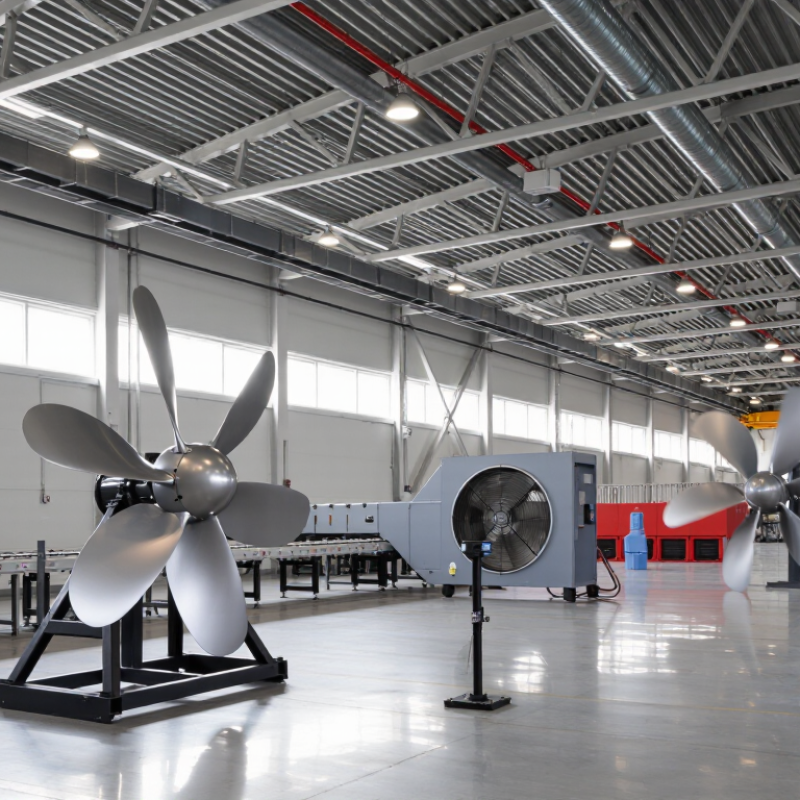
Industrial ventilation fans move contaminated, heated, humid, or dusty air out of working areas. They also bring in clean replacement air when buildings need balanced airflow. Unlike ordinary household fans, industrial units support demanding environments, long operating hours, and carefully measured air exchange. Common 2026 choices include axial, centrifugal, mixed-flow, roof exhaust, and high-temperature fans.
Their purpose is practical: reduce airborne pollutants, control heat, limit moisture, and improve visibility near machinery. During site inspections, engineers often check airflow at worker level, not only near the fan. A powerful motor does not guarantee effective ventilation. Poor duct design, blocked grilles, or incorrect fan placement can create stagnant pockets.
Most fans operate by converting motor power into rotating blade or impeller motion. Axial fans push air parallel to the shaft and suit large-volume, lower-pressure movement. Centrifugal fans turn airflow outward, producing higher pressure for duct systems and filters. Mixed-flow designs combine both behaviors. Fan selection depends on airflow volume, static pressure, temperature, noise, corrosion, and maintenance access.
The calculation is easy to underestimate. Airflow changes when filters become dirty. Energy use rises when resistance increases. A sensor may report acceptable conditions while one corner remains uncomfortable. Regular testing, cleaning, and documented adjustments make the system more reliable. Human judgment still matters.
Industrial ventilation fan types in 2026 are best classified by performance, installation, and operating conditions. Axial fans move large air volumes through relatively short ducts. Centrifugal fans create higher pressure for long duct systems and filtration equipment. Mixed-flow fans sit between these designs. They can balance airflow and pressure in compact industrial spaces.
Airflow and static pressure remain the key technical measurements. A dusty workshop may require a fan that handles dirty air without rapid blade wear. A welding area needs carefully planned source capture, not simply a larger general exhaust fan. Temperature, humidity, corrosive vapors, and particle size also influence material selection. Many engineers classify fans by drive arrangement, including direct-drive and belt-drive systems. Direct drive usually reduces maintenance points. Belt drive can offer useful speed flexibility.
Installation creates another practical category. Roof exhaust fans, wall-mounted fans, duct fans, and portable ventilation units serve different layouts. Variable-speed control can reduce energy use when demand changes during a shift. However, controls cannot correct an undersized duct or poorly placed intake. That mistake is still common. Noise levels, access for cleaning, guarding, vibration, and motor efficiency should be checked before purchase. Field measurements often reveal uneven airflow that design software misses. A reliable specification records airflow, pressure, temperature, duty cycle, and maintenance conditions, rather than naming a fan type alone.
Choosing an industrial ventilation fan starts with airflow, pressure, space, and contamination levels. Axial fans move large air volumes through relatively low-pressure systems. They suit warehouses, workshops, tunnels, and general heat removal. Their compact structure simplifies installation. However, noise and uneven airflow can become problems near occupied work areas.
Centrifugal fans handle higher resistance from filters, long ducts, dampers, and process equipment. Their enclosed impellers usually provide steadier pressure performance. They are useful for dust collection and controlled exhaust systems.
Mixed-flow fans combine axial capacity with centrifugal pressure capability. They often fit compact systems where duct resistance changes during operation. No fan wins every case.
Real buildings rarely match the clean conditions shown in selection charts. I would recheck pressure losses after installation, especially when filters begin loading.
Tips: Measure actual airflow and static pressure before choosing a fan. Check sound levels at worker height. Confirm motor protection, access for cleaning, and corrosion resistance. Variable-speed control can reduce energy use, but poor commissioning may create unstable airflow. Leave room for maintenance. That detail is easy to miss. A slightly larger fan is not automatically better; oversized equipment can waste power and complicate control. Consult current engineering standards and a qualified ventilation professional when safety-critical contaminants are involved.
What Are the Top Industrial Ventilation Fan Types in 2026?
Specialized Fans for Heat, Dust, Corrosive Air, and Hazardous Areas
Industrial ventilation in 2026 is becoming more application-specific. High-temperature zones often require centrifugal fans with heat-resistant housings, extended shafts, and cooled bearings. Axial fans suit large air volumes at lower resistance. However, they can lose performance when filters, ducts, or silencers create heavy pressure drops. A neat-looking fan can still be the wrong choice.
Dusty workshops need abrasion-resistant centrifugal impellers and accessible inspection doors. Fine particles may require spark-resistant construction and carefully designed dust extraction systems. The U.S. Department of Energy reports that motor-driven systems consume about 70% of industrial electricity. Efficient fan selection therefore affects both safety and operating costs. Variable-speed control can reduce energy use when airflow demand changes, but poor commissioning may erase those gains.
Corrosive air demands materials such as coated steel, stainless steel, or fiberglass-reinforced plastic. Chemical compatibility matters more than appearance. In hazardous areas, equipment must match the site’s classified zone, gas group, and temperature requirements. NFPA 652 emphasizes a documented combustible-dust hazard analysis, while OSHA ventilation guidance stresses capturing contaminants near their source. Remote motors, sealed bearings, and separated air paths can reduce exposure risks. Yet maintenance access is often underestimated. A fan that cannot be safely inspected may become a hidden weakness. Performance testing should verify airflow, static pressure, vibration, temperature, and noise under real operating conditions.
| Fan Type | Typical Industrial Duty | Key Design Features | Main Advantages | Important Selection Considerations |
|---|---|---|---|---|
| Axial-flow fan | General ventilation, equipment cooling, and moving large volumes of relatively clean air through low-resistance systems. | Air travels approximately parallel to the fan shaft; commonly supplied as propeller, tube-axial, or vane-axial designs. | Compact installation and high airflow capacity for applications with comparatively low system resistance. | Check the system pressure requirement, duct layout, noise limits, and operating point. Axial fans may be unsuitable where filters or long duct runs create high resistance. |
| Backward-curved centrifugal fan | Process exhaust, clean-air supply, and ventilation systems requiring moderate to high pressure. | Curved blades turn air outward from the impeller; often selected for systems with ductwork, filters, or other resistance. | Efficient operation is possible when the fan is correctly selected and operated near its intended duty point. | Confirm airflow, total pressure, fan speed, motor power, and the system curve. It is generally intended for relatively clean gas unless specifically designed for particulate service. |
| Radial-blade centrifugal fan | Dust-laden exhaust, material handling, and other services involving heavier particulate loads. | Straight or radial blades and a robust wheel design; some configurations provide wider passages for particle-laden air. | Can be suited to demanding particulate applications and may be more tolerant of material buildup than clean-air wheel designs. | Specify particle size, concentration, abrasiveness, moisture, and risk of buildup. Abrasion-resistant components, cleanout access, and suitable filtration may be needed. |
| High-temperature centrifugal fan | Furnace exhaust, kiln systems, hot-process ventilation, and other elevated-temperature gas streams. | Temperature-appropriate wheel, casing, shaft arrangement, bearings, seals, and motor isolation or cooling provisions. | Designed to handle process heat when materials and components are selected for the actual operating conditions. | Provide continuous and peak gas temperatures, startup conditions, thermal expansion details, gas composition, and required duty. Temperature capability depends on the complete fan assembly, not the impeller alone. |
| Corrosion-resistant fan | Exhaust containing corrosive vapors or fumes, such as certain acid-handling or chemical-process applications. | May use suitable polymeric or fiber-reinforced plastic components, corrosion-resistant metals, protective linings, or compatible coatings. | Material selection can reduce corrosion-related damage and help extend service life in compatible environments. | Identify the chemicals, concentrations, temperatures, moisture, and cleaning agents. Verify compatibility for every wetted component; no single material is resistant to all chemicals. |
| Explosion-protected ventilation fan assembly | Ventilation in locations where flammable gases, vapors, or combustible dust may create a hazardous atmosphere. | Requires a correctly specified assembly, including suitable electrical equipment, installation, and any applicable non-sparking or ignition-control features. | Can be incorporated into a ventilation system designed for a classified hazardous location and its ignition risks. | Confirm the area classification, substance group, temperature class, dust conditions, and applicable local codes. Fan selection alone does not make an installation safe; the complete system must be assessed. |
| Induced-draft centrifugal fan | Drawing hot or contaminated gas through process equipment, scrubbers, bag filters, or other treatment systems. | Installed downstream of process equipment to pull gas through the system; commonly selected to meet the combined pressure loss of connected equipment. | Supports controlled extraction through systems with substantial resistance when appropriately sized. | Account for gas temperature, dust loading, corrosion, filter pressure drop, leakage, and changing operating conditions. Use the actual system resistance and gas properties for selection. |
Selection note: Fan performance and material suitability depend on the actual airflow, pressure, gas properties, temperature, contaminants, installation, and applicable safety requirements. Confirm the duty point and system design with qualified engineering personnel.
In 2026, selecting an industrial ventilation fan requires more than comparing airflow figures. Axial fans suit large spaces with low resistance, such as warehouses and workshops. Centrifugal fans handle higher static pressure from filters, ducts, and heat exchangers. HVLS fans circulate air across wide floors, but they do not replace local exhaust systems. The best choice depends on the pollution source, building layout, and operating schedule.
Measure required airflow in cubic feet per minute, then check static pressure carefully. A fan that delivers strong airflow in an open test may perform poorly through a long duct. Consider temperature, humidity, dust concentration, corrosion risk, and noise limits. Select a motor with suitable protection and a variable-frequency drive when demand changes during the day. Inspect the fan curve, not only the advertised maximum airflow. That figure can mislead. In field evaluations, access for cleaning and belt replacement often matters as much as efficiency. A perfect calculation still fails if technicians cannot safely reach the equipment.
Tips: Map hot zones and contaminant sources before choosing a fan location. Leave clear service space around motors and guards. Ask for measured performance data at your working pressure. Check whether the fan can run continuously at the required temperature. Do not oversize automatically; excessive airflow may waste energy and disturb doors, dust control, or worker comfort. Recheck the design after installation, because real ducts rarely match the original drawing exactly.