Top 10 Types of Ball Bearings and Their Applications?
Ball Bearings are crucial components in many mechanical systems. They reduce friction and allow smooth movement between parts. Different types of ball bearings exist, each designed for specific applications. These variations can influence performance significantly.
The right ball bearing can enhance efficiency in machinery. For instance, deep groove ball bearings handle radial and axial loads well. In contrast, angular contact ball bearings provide high-speed capabilities. This diversity offers solutions for industries like automotive, aerospace, and manufacturing.
However, not all ball bearings are perfect for every situation. Some might wear out quickly under heavy loads. Others may require special lubrication to function properly. Choosing the right type is often challenging. It demands a deep understanding of the application requirements. As technology evolves, new designs emerge. Yet, many still face limitations that require careful consideration.
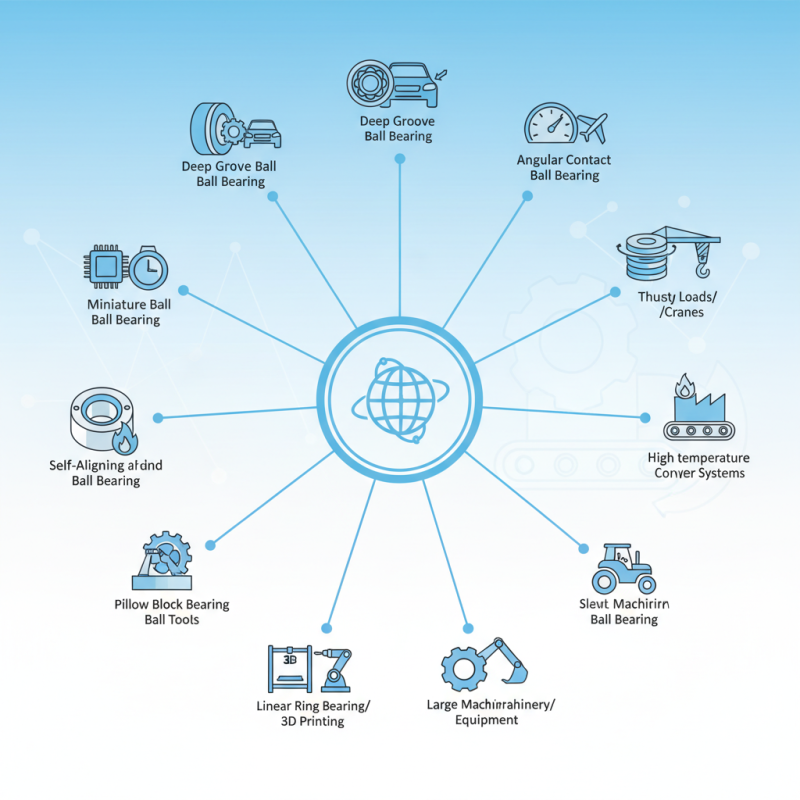
Overview of Ball Bearings and Their Importance in Machinery
Ball bearings play a crucial role in modern machinery. They reduce friction between moving parts, enhancing efficiency. According to industry reports, ball bearings can increase machine lifespan by up to 40%. This improvement is vital in sectors like automotive and aerospace, where reliability is key. Different types of ball bearings cater to various applications, from electric motors to household appliances.
When selecting ball bearings, consider their load capacity. The capacity affects performance. Using the wrong type can lead to premature failure. A detailed analysis of required specifications helps in making the right choice. For instance, deep groove bearings are popular for their versatility, while angular contact bearings excel in high-speed applications.
Tips: Always consult professional guidelines when choosing ball bearings. Regular maintenance checks can prevent unexpected breakdowns. It’s important to remember that even the best bearings can wear down. Performance can diminish over time due to dust or poor lubrication. Consider these factors to ensure longevity.
Types of Ball Bearings and Their Distinctive Features
Ball bearings are essential components found in various machines and devices. They facilitate smooth movement and reduce friction. However, not all ball bearings are the same. Each type has unique features that cater to specific applications.
Radial ball bearings are common. They handle loads from multiple directions. This makes them versatile for many uses, like in electric motors. Angular contact bearings are different. They are designed to support high speeds and axial loads. You often find them in high-performance applications, such as in racing cars. Another type is the thrust bearing, primarily used to support axial loads. They are crucial in applications like gearboxes.
Ceramic ball bearings have gained popularity. They’re known for their durability and lightweight nature. However, they can be more expensive. In contrast, steel bearings might be heavier but are often more cost-effective. It's essential to understand these differences. Selecting the wrong type can lead to inefficiency. Each application demands careful consideration of the bearing's characteristics. Balancing performance and cost is not always straightforward.
Top 10 Types of Ball Bearings and Their Applications
| Type of Ball Bearing | Distinctive Features | Common Applications |
| Deep Groove Ball Bearing | Versatile, can support both radial and axial loads | Electric motors, automotive applications |
| Angular Contact Ball Bearing | Designed for combined loads; can carry axial loads in one direction | Machine tool spindles, pumps |
| Self-Aligning Ball Bearing | Allows for shaft misalignments; two rows of balls | Agricultural machinery, conveyors |
| Thrust Ball Bearing | Designed to handle axial loads; often used in pairs | Gearboxes, turbine generators |
| Ceramic Ball Bearing | High resistance to heat and corrosion; lighter | High-speed applications, medical devices |
| Needle Roller Bearing | Compact design; carries heavy loads with small diameter | Automotive transmissions, construction equipment |
| Spherical Roller Bearing | Self-aligning capabilities; capable of carrying heavy radial loads | Mining, steel industries |
| Harmonic Drive Bearing | Designed for precise motion control; ultra-thin profile | Robotics, aerospace applications |
| Crossed Roller Bearing | Two sets of rollers arranged at right angles; high rigidity | CNC machines, optical devices |
| Magnetic Bearing | Uses magnetic forces to support the load; no friction | Turbo-machinery, flywheel energy storage |
Common Applications of Different Ball Bearing Types
Ball bearings play a critical role in various machinery and applications. Different types serve unique purposes. For instance, deep groove ball bearings are widely used in electric motors and conveyor systems. Their versatility makes them essential, accounting for over 40% of the ball bearing market.
Another significant type is angular contact ball bearings. These bearings handle combined loads. They are often found in machine tools and aerospace applications. In some cases, precision is crucial. Reports suggest that these bearings can improve equipment efficiency by 15% or more.
Self-aligning ball bearings are designed for simple maintenance. They tolerate misalignment, making them valuable in agricultural machinery and automotive components. Despite their benefits, they may require frequent checks for wear. It’s essential to monitor their performance regularly to ensure optimal operation. In a world focused on efficiency, understanding each bearing's applications can drive better choices and innovations.
Factors to Consider When Choosing Ball Bearings
Choosing the right ball bearings is crucial for optimal performance in various applications. One important factor is load capacity. Bearings must support the weight they’ll carry. Calculate the expected load to determine the suitable type. Don’t underestimate this; incorrect sizing can lead to failure.
Another key aspect is the operating environment. Bearings may face exposure to moisture, dust, or chemicals. Selecting materials that resist corrosion or wear is essential. For example, stainless steel is great for damp conditions, while plastic may work in less demanding scenarios.
Speed is also a consideration. High-speed applications require bearings that minimize friction. Ceramic ball bearings can be lightweight and durable but cost more. Remember to assess your budget and performance needs carefully. It’s not always easy to find the perfect balance. Different needs can conflict, so prioritize what’s most important for your situation.
Maintenance Practices for Maximizing Ball Bearing Lifespan
Maintaining ball bearings is crucial for their longevity. Regular inspections can prevent costly failures. Check for dirt buildup or signs of wear. This can save time and money in the future. Cleaning must be done carefully. Use appropriate solvents and avoid abrasive materials.
Lubrication is another key practice. Proper lubrication reduces friction and heat. Too much or too little can lead to issues. Use the right type of grease. Follow guidelines for frequency and quantity. It’s a simple step but often overlooked. Monitoring performance also helps. Listen for unusual noises or vibrations. This might indicate a problem that needs immediate attention.
Ignoring these maintenance tasks can be risky. Small issues can turn into major repairs. Schedule regular maintenance checks. Establish a routine that fits your needs. Investing time in these practices pays off. It ensures reliability and efficiency in operations.
Top 10 Types of Ball Bearings and Their Applications
This chart displays the top 10 types of ball bearings based on their applications index. Each type of bearing is commonly used in various machinery and equipment, illustrating their significance in maintaining operational efficiency.
 Skip to content