Skip to content

Who Are the China Top Solvent Adhesive Manufacturers?

China is a major source of industrial bonding materials, but “top manufacturer” can mean different things to different buyers. This guide examines how to assess Chinese Solvent Adhesive manufacturers through practical, verifiable criteria—not marketing claims alone. Product range, production consistency, technical support, and clear documentation all matter. So do the details. A well-labeled sample, a current technical data sheet, and a direct answer about suitable substrates can reveal more than a glossy catalog.

Applications vary widely, from footwear and packaging to furniture and automotive components. A reliable supplier should explain which formulation fits the materials, operating conditions, and production process. Buyers can compare sample performance, request quality-control information, and ask how the manufacturer handles batch consistency. Factory visits or independent audits may provide further context when feasible. Still, no single checklist guarantees a perfect match. Even experienced buyers can miss a small process detail.

This overview helps readers compare potential suppliers with care. It focuses on evidence such as product specifications, documented testing, communication, and relevant manufacturing experience. Claims should be checked against the intended application, since performance depends on both the adhesive and how it is used. The strongest choice may not be the largest company or the lowest quotation. It is the supplier whose capabilities align with the buyer’s needs—and whose answers hold up under scrutiny.
Who Are the China Top Solvent Adhesive Manufacturers?

How Solvent-Based Adhesives Are Defined and Used in China

In China, “solvent-based adhesive” describes a formulation in which a polymer binder is carried in an organic solvent. The liquid wets the surface, then the solvent evaporates, leaving an adhesive film. Bonding may rely on contact, pressure, or later assembly. Not one recipe. Formulations vary by polymer, substrate, flexibility, heat resistance, and setting speed.

The China Adhesives and Tape Industry Association reported about 8.52 million tonnes of total adhesive production and RMB 326.7 billion in sales in its 2022 industry statistics. These figures cover all adhesive categories, not solvent-based products alone. That distinction matters. Solvent formulations are used in footwear, automotive interiors, furniture, flexible packaging, and industrial laminating, where quick tack or adhesion to rubber and plastics can be useful.

On a converting line, an operator may coat a thin layer onto film or fabric, allow a controlled drying interval, then press the surfaces together. Practical checks include coat weight, residual solvent, open time, bond strength, and ventilation. The category is not perfectly tidy; shop-floor terms sometimes group different chemistries together. Selection should follow substrate trials and technical data sheets, not the word “solvent” alone. CATIA’s figures describe a broad market, but do not specify solvent-based adhesive’s share.

How China’s Solvent Adhesive Industry Is Structured

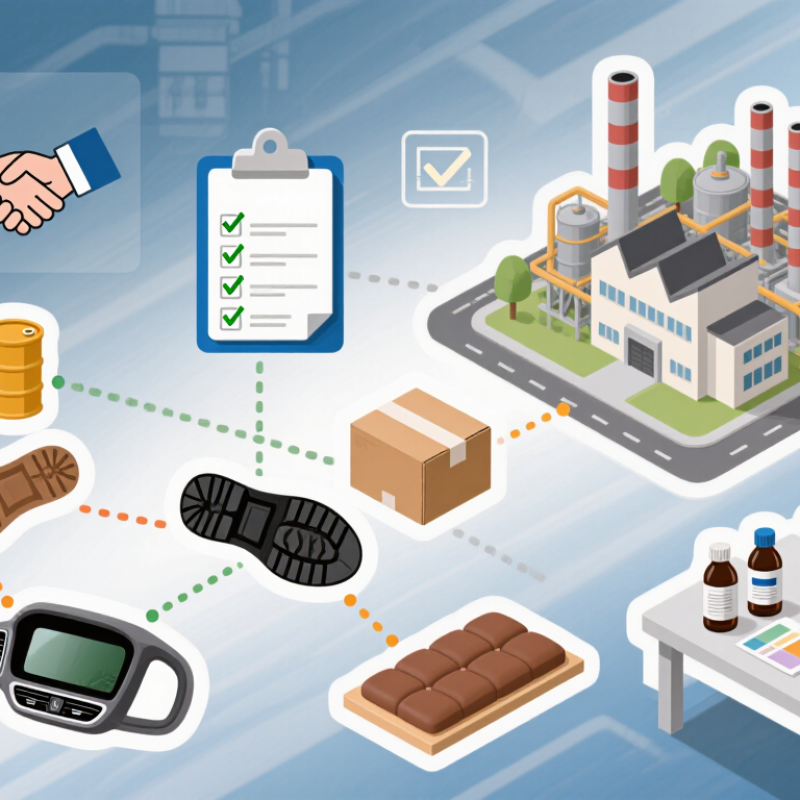
China’s solvent adhesive industry is not one uniform factory network. It is better understood as connected layers, each with a different role. Upstream suppliers provide resins, solvents, and additives. Formulators combine these materials to meet needs such as bonding strength, drying time, and flexibility. Converters and end users then test adhesives on real production lines. That matters. A formula that performs well on a clean sample may behave differently on coated fabric or a dusty surface.

Manufacturers vary in scale and specialization. Some serve broad industrial markets, while others focus on packaging, footwear, furniture, or vehicle components. Distribution and technical service also shape the industry: buyers may need help adjusting application temperature, coating weight, or drying conditions. When comparing suppliers, examine process controls, batch consistency, test documentation, and the support available after delivery. A large production site alone does not guarantee a good fit. This picture is useful, but not complete; capabilities can differ between product lines within one company.

Tips: Ask for a sample tested on your actual substrate, not only a standard sheet. Record the temperature, coating amount, and drying time. Small details count. Request current technical data and clarify how quality is checked between batches.

Who Are the China Top Solvent Adhesive Manufacturers? – How China’s Solvent Adhesive Industry Is Structured
Industry Dimension How the Segment Is Structured Relevant Products or Applications Market Context
Market organization The sector includes chemical-material suppliers, adhesive formulators, contract and specialist producers, distributors, and application-service providers. Manufacturers vary in scale, technical focus, and the markets they serve. Formulated industrial adhesives, customized grades, technical support, and distribution services. There is no single product or supplier profile that represents the entire market; supplier selection typically depends on application requirements and compliance needs.
Main adhesive chemistries Solvent-based products are made with different polymer systems. Common categories include polyurethane, chloroprene rubber, acrylic, and other rubber-based formulations. Flexible bonding, footwear assembly, laminating, construction and interior applications, and selected automotive uses. Performance differs by chemistry and formulation, including adhesion, flexibility, heat resistance, drying behavior, and compatibility with the substrate.
Upstream supply Producers source polymers, resins, solvents, additives, and other formulation inputs from the broader chemical-material supply chain. Polymer and resin systems, organic solvents, fillers, stabilizers, and performance additives. Input specifications and availability influence formulation choices, product consistency, cost, and compliance management.
Downstream demand Demand comes from manufacturers that need bonding during assembly, lamination, finishing, or repair. Requirements differ by production process and end use. Footwear and leather goods, furniture and interior materials, packaging and laminating, building materials, and some transportation-related applications. Adhesive selection is application-specific; users assess bonding performance alongside production conditions, worker safety, and emissions requirements.
Regional manufacturing ecosystems Production and demand are associated with China’s wider chemical and manufacturing bases. Guangdong, the Yangtze River Delta, and Fujian are examples of regions with relevant industrial and downstream manufacturing activity. Regional supply networks serving footwear, consumer goods, packaging, furniture, and other manufacturing sectors. These are broad industrial ecosystems, not exclusive production zones or a ranking of manufacturers.
Product positioning Suppliers may focus on general-purpose grades, application-specific formulations, customized products, or technical service for particular manufacturing processes. Grades designed for specific substrates, bonding speeds, environmental conditions, or production-line requirements. Comparisons should use the same application and test conditions; product names alone do not establish equivalent performance.
Environmental and product compliance China’s GB 33372-2020 standard sets limits for volatile organic compound content in adhesives across specified product categories. Adhesives placed on the market for the categories covered by the standard. Applicable limits depend on the product category and relevant test method. Buyers should verify current requirements and obtain product-specific compliance documentation.
Technology and product trends Manufacturers and users evaluate lower-emission formulations and alternative bonding technologies as part of product development and process improvement. Reformulated solvent-based products, water-based adhesives, hot-melt adhesives, and other bonding systems. Alternatives are not automatically interchangeable; performance, equipment, drying or curing conditions, and total process cost need to be assessed.
Supplier evaluation Purchasers commonly assess technical fit, quality control, production capability, delivery reliability, documentation, and application support. Sample testing, technical data sheets, safety data sheets, quality records, and compliance evidence. A practical comparison is based on verified product data and trials under the buyer’s actual manufacturing conditions, rather than an unsupported universal ranking.

Note: This table describes industry structure and product categories. It does not rank manufacturers or imply market-share figures.

Which Manufacturers Rank Among China’s Leading Suppliers

China’s leading solvent adhesive suppliers are best judged by capability, not by a catchy ranking. Buyers should compare manufacturers that publish clear technical data, maintain stable production, and support product selection with experienced engineers. A reliable supplier can explain how its adhesive performs on specific materials, such as PVC film, coated fabric, or rubber, rather than offering one solution for every job.

Useful evidence includes consistent batch records, practical application guidance, and test results for bond strength, drying time, and heat resistance. Ask how the supplier handles changes in raw materials and whether it can provide samples for trials on your actual production line. These checks help distinguish established manufacturing capability from broad sales claims. A precise national ranking is difficult to verify, and supplier fit can vary by application and order volume. That uncertainty matters.

Tips: Request a recent technical data sheet and test a small sample under real working conditions. Record surface preparation, adhesive amount, drying time, and temperature. One detail is easy to miss: a strong initial bond may not predict long-term performance. Compare results after suitable aging, and keep the test conditions consistent.

What Products and Applications These Manufacturers Serve

China’s solvent adhesive manufacturers serve buyers who need fast tack, strong bonding, or reliable performance on flexible materials. Their product ranges commonly include rubber-based contact adhesives, pressure-sensitive adhesives, and formulations for laminating films. Some are supplied as liquids for coating or brushing; others are designed for roll coating in production lines. Details matter. A small change in viscosity can affect coating thickness and drying time.

Applications vary by material and process. Footwear makers may bond rubber soles to leather or synthetic uppers. Furniture and interior-product factories use solvent adhesives for foam, fabric, and decorative laminates. Packaging converters may apply them to film structures where heat or moisture resistance is needed. In each case, buyers should test adhesion, open time, drying behavior, and compatibility with the exact substrate. A sample that works on one plastic may fail on another.

Manufacturers may also provide customized viscosity, solids content, or packaging sizes for different equipment. Ask for technical data and trial samples, then evaluate them under real line conditions—not only on a clean laboratory panel. The categories overlap more than a neat product chart suggests. That can make selection less straightforward. It is worth checking batch consistency and technical support before scaling up.

Who Are China’s Top Solvent Adhesive Manufacturers? Products and Applications Served

Common solvent adhesive product families serve a range of industrial applications. This chart compares the number of representative application areas listed for each family.

Application examples include footwear, furniture and foam, construction laminates, automotive interiors, textiles, labels and tapes, plumbing, and PVC fabrication. Counts reflect only the examples summarized here; they are not market shares, sales figures, production volumes, or a ranking of Chinese manufacturers.

How to Compare and Verify Chinese Solvent Adhesive Manufacturers

China’s solvent adhesive manufacturers should be compared by process control, not catalog breadth. Grand View Research’s Adhesives and Sealants Market report valued the global market at USD 78.6 billion in 2023 and forecast 5.4% annual growth through 2030. This broad market estimate signals competition, not proof that a supplier meets your needs. Numbers need context. Confirm that the quoted product is solvent-based, then request its current technical data sheet, safety data sheet, and batch-specific certificate of analysis. Compare solids content, viscosity, open time, and peel or shear strength under identical test conditions. Different test methods can make results look better than they are.

For verification, check production records, lot traceability, and quality-control procedures. Ask how the factory handles viscosity checks and retains batch samples. A video tour helps, but it is not an audit. Where practical, arrange a site visit or independent assessment, then test samples on your own substrate and production line. Confirm that sample labels match the documents and that the supplier can explain any variation between batches. I would not rely on one successful sample; it may not represent routine production. Request recent test reports, clarify who performed each test, and verify that reported conditions match your intended use.