Why Choose a Forklift Truck for Your Warehouse?
Why Choose a Forklift Truck for Your Warehouse?
A Forklift Truck remains one of the most practical tools for moving pallets, unloading trailers, and positioning heavy goods. Its value becomes visible at 6 a.m., when receiving teams must clear a crowded dock before the next delivery arrives. OSHA estimates that forklifts cause approximately 35,000 serious injuries and 85 fatal injuries annually in the United States. This figure should not be ignored. It shows that productivity and safety must be planned together.
Industry reports also point toward pressure on warehouse operators. The MHI 2024 Annual Industry Report identifies labor shortages, rising service expectations, and technology investment as continuing supply-chain concerns. A suitable Forklift Truck can reduce manual handling and shorten travel distances. Yet, the wrong model can create congestion, battery delays, or damaged racking. A narrow-aisle truck may save space, but it may struggle with long loads or uneven floors. Real warehouses are rarely perfect.
Martin McVicar, CEO of Combilift, describes forklifts as “the workhorses of warehouses.” That phrase explains their enduring role. They work quietly between storage racks, loading bays, and production lines. However, choosing one requires more than comparing lifting capacity. Managers should examine load dimensions, lift height, aisle width, fuel or battery needs, operator visibility, and maintenance support. The cheapest purchase may become the costliest decision. This is where experience matters. A forklift should fit the workflow, not force the workflow to change.
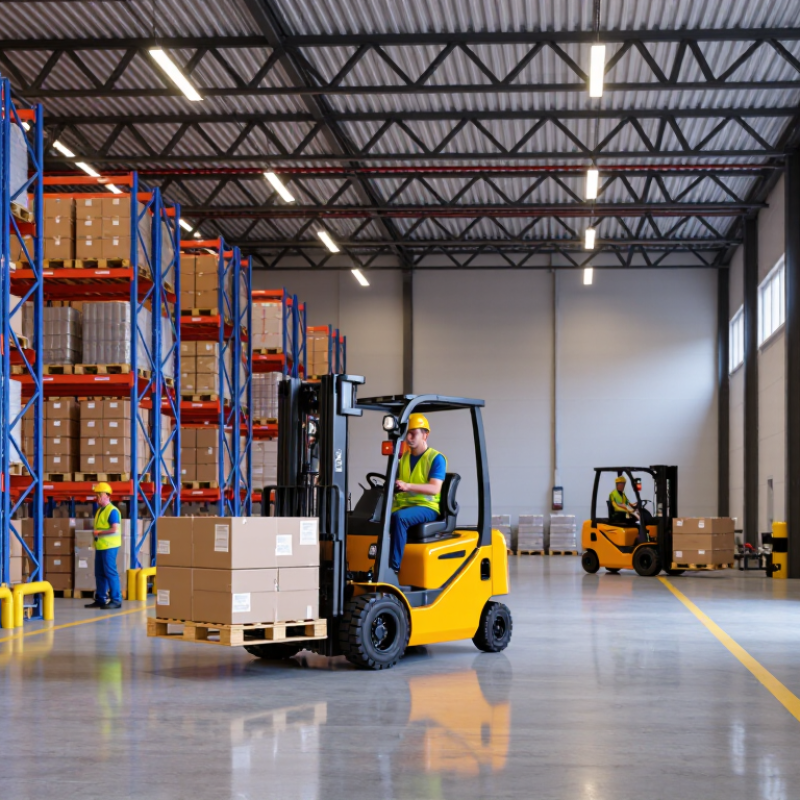
Why Warehouses Choose Forklifts: OSHA Reports Nearly 85 Fatalities Annually
Why Choose a Forklift Truck for Your Warehouse?
A forklift can move heavy pallets through narrow aisles with controlled, repeatable handling. However, that convenience carries measurable risk. OSHA reports nearly 85 worker fatalities each year involving powered industrial trucks. It also estimates about 34,900 serious injuries and 61,800 non-serious injuries annually. These figures make equipment selection a safety decision, not only a productivity choice.
A suitable forklift should match the warehouse layout, load weight, lift height, surface condition, and traffic pattern. NIOSH identifies forklift overturns as a leading cause of fatal incidents, representing roughly one-quarter of forklift-related deaths. A stable load matters. So does a clear view. Operators may still struggle when pallets block sightlines or shelves force awkward turns. That detail is easy to underestimate.
Training must cover inspections, pedestrian awareness, load balance, and emergency procedures. OSHA requires trained and certified operators, with evaluations at least every three years and after unsafe operation or workplace changes. Daily checks should include tires, forks, brakes, warning devices, and hydraulic leaks. Small defects become serious beside a loaded vehicle. Warehouse managers should also separate walking routes from forklift lanes whenever possible. This is not always convenient. Yet ignoring that inconvenience can create blind corners, rushed decisions, and preventable injuries. Forklifts remain valuable when their capacity fits the task, their controls fit the space, and actual worker behavior informs the plan.
Core Functions: Move, Lift, Stack, and Retrieve Loads in Vertical Storage
Why Choose a Forklift Truck for Your Warehouse?
A forklift truck supports four essential warehouse tasks: moving, lifting, stacking, and retrieving loads. It can carry pallets across receiving areas, production zones, and dispatch lanes. The operator can raise goods to upper racking levels with controlled mast movement. This makes vertical storage more practical when floor space is limited. Every movement matters.
In daily warehouse operations, load stability depends on more than lifting capacity. Operators must check pallet condition, load balance, aisle width, and rack clearance. A properly positioned load reduces shifting during travel. Smooth acceleration also protects products and nearby equipment. Clear visibility is important, especially when a raised load blocks the forward view. In that case, the operator should travel carefully or use an approved alternative viewing method.
A well-planned forklift route can reduce unnecessary handling and improve retrieval speed. It should match the warehouse layout, storage height, floor condition, and typical load weight. Training, scheduled inspections, and documented maintenance support reliable performance. Still, no layout is perfect. Aisles may become crowded, labels may fade, and rushed decisions can create trouble. Reviewing near misses and adjusting storage practices can reveal weaknesses before they become costly. That reflection is easy to skip. It should not be.
Why Choose a Forklift Truck for Your Warehouse?
Forklift trucks support four essential warehouse functions: moving loads horizontally, lifting them safely, stacking pallets in vertical storage, and retrieving goods when required. The chart presents practical planning ranges for a standard pallet-handling cycle in a structured warehouse environment.
The estimated cycle-time ranges are general operational reference values for a conventional pallet-handling workflow. Actual performance depends on travel distance, load weight, rack height, aisle width, operator experience, and warehouse layout.
Forklift Types: Compare Counterbalance, Reach, Pallet, and Order-Picking Trucks
Why Choose a Forklift Truck for Your Warehouse?
Forklift Types: Compare Counterbalance, Reach, Pallet, and Order-Picking Trucks
Choosing a forklift starts with the warehouse task, not the machine’s headline capacity. Counterbalance trucks suit loading bays, production areas, and outdoor yards. Their exposed forks handle bulky loads directly from pallets. However, they need wider turning space. That detail is easy to underestimate. OSHA reports about 35,000 serious forklift injuries and 62,000 non-serious injuries annually in the United States. Traffic design and operator training matter as much as lifting power.
Reach trucks work better in narrow aisles and tall racking. Their extended mast can place pallets at height while keeping the truck compact. They are less suitable for rough outdoor surfaces. Pallet trucks are simpler for short horizontal moves, especially near receiving docks. Electric versions can reduce local noise and exhaust, but battery charging still needs planning. A small fleet may also use order-picking trucks for piece-level fulfillment. These models improve access to inventory, though they can increase pedestrian exposure.
The 2024 MHI Annual Industry Report identifies labor availability and warehouse efficiency as continuing operational pressures. That makes task-specific equipment valuable, but automation is not always the answer. I would measure aisle width, rack height, load weight, travel distance, floor condition, and daily moves before selecting a type. A counterbalance truck may appear versatile, yet it can waste time in dense storage. A reach truck may improve space use, but only with disciplined load placement. No chart replaces a floor walk. The first specification can still be wrong.
Safety and Training: OSHA Estimates 34,900 Serious Injuries Each Year
Why Choose a Forklift Truck for Your Warehouse?
Forklift trucks move heavy pallets efficiently through busy warehouse aisles. They reduce manual lifting and help teams position loads with greater control. However, productivity should never outrun preparation. OSHA estimates 34,900 serious forklift-related injuries occur each year. Each number represents a person, a disrupted operation, and a preventable risk that deserves attention. Safe use begins with trained operators, suitable equipment, and clear traffic procedures.
An operator should complete a pre-shift inspection before moving the first pallet. Check the tires, forks, warning signals, brakes, and visible hydraulic leaks. Keep loads balanced and within the rated capacity. Travel slowly near blind corners, doorways, and pedestrian routes. Seat belts must be used when provided. Even experienced operators can misjudge a turning radius or unstable load. That possibility deserves honest discussion during refresher training. I have found that short, practical coaching often reveals habits that formal testing misses.
Tips: Mark walking lanes clearly. Use mirrors at blind intersections. Sound the horn where visibility is limited. Keep pallets low while traveling. Never carry passengers. Supervisors should document training, inspections, and near misses. A near miss is not “nothing happened.” It is useful evidence. Review it with the team, then adjust the layout, procedure, or training. Training should include classroom instruction, hands-on practice, and workplace evaluation by a qualified person.
Why Choose a Forklift Truck for Your Warehouse? - Safety and Training: OSHA Estimates 34,900 Serious Injuries Each Year
Key safety and training considerations for selecting, operating, and managing forklift trucks in warehouse environments.
| Safety and Training Dimension |
Verified Safety Fact or Requirement |
Recommended Warehouse Practice |
Reference |
| Annual injury exposure |
Approximately 34,900 serious injuries and 61,800 non-serious injuries involving powered industrial trucks are reported each year in the United States. |
Treat forklift traffic as a major warehouse risk and maintain a documented powered-industrial-truck safety program. |
U.S. occupational safety guidance, Powered Industrial Trucks |
| Operator authorization |
Only trained and authorized operators may operate powered industrial trucks. |
Use an operator authorization list and prevent untrained personnel from using warehouse forklifts. |
29 CFR 1910.178(l) |
| Training structure |
Training must include formal instruction, practical training, and an evaluation of the operator’s performance. |
Combine classroom or digital lessons with hands-on driving, load handling, parking, and pedestrian-awareness exercises. |
29 CFR 1910.178(l)(2) |
| Operator evaluation |
Each operator’s performance must be evaluated at least once every three years. |
Schedule evaluations before the three-year deadline and retain signed assessment records. |
29 CFR 1910.178(l)(4) |
| Refresher training |
Refresher training is required when an operator is involved in an accident or near miss, operates unsafely, is assigned a different truck type, or workplace conditions change. |
Trigger refresher training through incident reports, safety observations, equipment changes, and layout changes. |
29 CFR 1910.178(l)(4) |
| Daily inspection |
Powered industrial trucks must be examined before being placed in service, and more frequently when necessary. |
Require pre-shift checks covering brakes, steering, tires, forks, warning devices, controls, leaks, and safety equipment. |
29 CFR 1910.178(q)(7) |
| Defect management |
Unsafe trucks must be removed from service until they have been restored to safe operating condition. |
Use visible out-of-service tags, isolate defective equipment, and document corrective actions before release. |
29 CFR 1910.178(p)(1) |
| Pedestrian protection |
Operators must slow down and sound the horn at cross aisles and other locations where vision is obstructed. |
Separate pedestrian and forklift routes where feasible, improve visibility at blind corners, and enforce low-speed operation. |
29 CFR 1910.178(n) |
| Load stability |
Loads must be stable, safely arranged, and within the rated capacity of the truck. |
Display capacity information, inspect pallets, center loads, and prohibit overloading or unstable stacking. |
29 CFR 1910.178(o) |
| Parking and shutdown |
When a truck is left unattended, the load-engaging means must be fully lowered, controls neutralized, power shut off, and brakes set. |
Mark designated parking areas and verify shutdown procedures during supervisor safety observations. |
29 CFR 1910.178(m)(5) |
Regulatory references: U.S. occupational safety regulations for powered industrial trucks, including 29 CFR 1910.178. Requirements should be reviewed alongside applicable local regulations and site-specific risk assessments.
 Skip to content