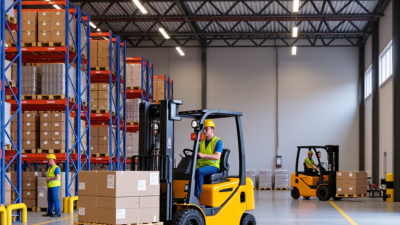
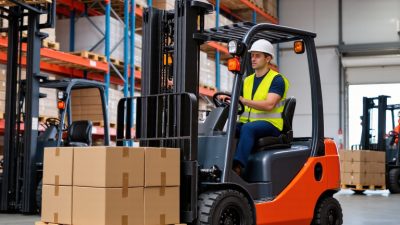
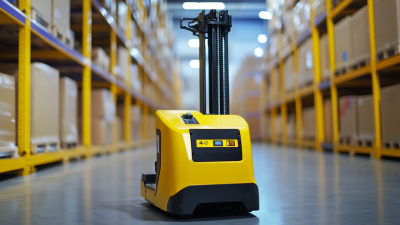
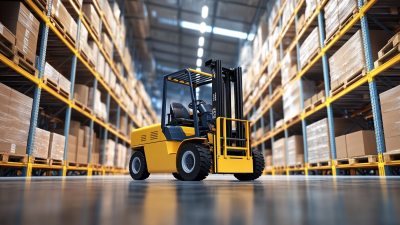
China Top Fork Lift Manufacturers for Global Buyers
Global buyers compare more than a Fork Lift’s purchase price. They need dependable capacity, suitable power, and parts that remain available after delivery. Grand View Research estimated the global forklift market at USD 67.7 billion in 2023. Its Forklift Market Size, Share & Trends Analysis Report projected a 7.4% compound annual growth rate from 2024 to 2030. These figures suggest sustained demand, but they do not guarantee that every supplier can meet a buyer’s operating needs. Details matter.
China’s manufacturers serve a broad market, from electric warehouse trucks to heavy-duty counterbalance models. The World Industrial Truck Statistics (WITS) program tracks industrial truck shipments across regions and product classes, offering useful context for evaluating market activity. Yet shipment data alone cannot show how a specific machine performs in a humid port, a narrow warehouse aisle, or a cold-storage facility. Buyers should verify rated capacity, battery specifications, safety features, warranty terms, and local service support directly with suppliers. Ask for test records and clear parts lead times.
A low quote can hide practical trade-offs. That deserves attention. This guide examines leading Chinese manufacturers through product range, export experience, technical documentation, and after-sales capability. It does not treat scale as proof of quality. Buyers should confirm claims against current product documents and independent inspections, since specifications and support arrangements can vary by model and destination. No single ranking fits every fleet. The right choice depends on the load, shift pattern, site conditions, and service network available where the truck will work.
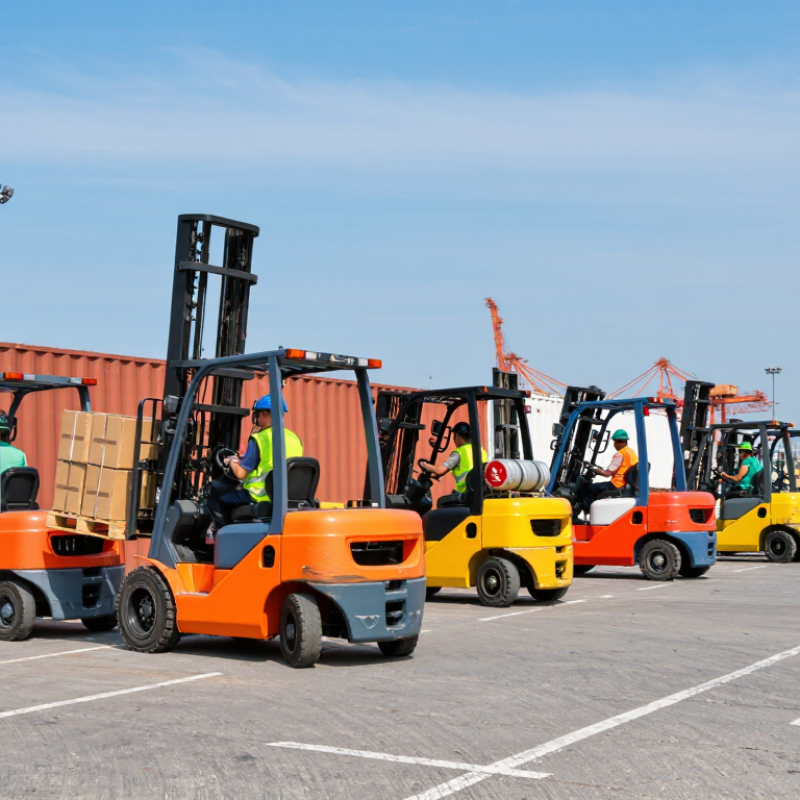
Overview of China's Forklift Manufacturing Industry
China’s forklift industry combines high-volume production with a broad range of equipment, from compact warehouse trucks to heavy-duty counterbalance models. The China Construction Machinery Association’s Industrial Vehicle Branch reported 1,173,785 forklift sales in 2023. This figure indicates substantial manufacturing capacity, but it does not mean every factory offers the same quality, service support, or export readiness.
That scale matters. Suppliers serve ports, distribution centers, factories, and construction sites, where aisle width, load weight, floor conditions, and shift length shape equipment needs. Electric models suit many indoor operations, while combustion-powered trucks remain useful for some outdoor tasks. Buyers should compare rated capacity, battery specifications, spare-parts access, and operator training—not only purchase price. Small details count. A charger that does not match a site’s power supply can cause delays.
Industry growth also brings practical questions. Production volume alone cannot verify durability or consistent quality. Buyers can request test records, component specifications, warranty terms, and clear maintenance schedules. Export experience matters, yet support after delivery deserves equal attention. Public industry statistics rarely show the reliability of individual machines in daily use. That is a real limitation, and it calls for careful supplier checks before a fleet order.
Leading Chinese Forklift Manufacturers and Their Market Focus
Chinese forklift manufacturers serve several distinct buyer needs, rather than one uniform market. Some focus on compact electric trucks for warehouses, where quiet operation and tight turning space matter. Others build higher-capacity models for outdoor yards, ports, and heavy industrial sites. The right choice depends on the work, not just the rated load.
Look closely at the machine’s daily operating conditions. A chilled warehouse, for example, may require a battery and components suited to low temperatures. A busy loading bay needs dependable braking, clear visibility, and easy access for routine maintenance. Ask manufacturers for load charts, duty-cycle guidance, and parts availability in your region. A brochure can look convincing; actual support is less abstract.
Export-oriented producers often offer multiple power options and configurations for different markets. Buyers should verify that operator protections, documentation, and specifications match local requirements before ordering. Also compare warranty terms and technician training, not only purchase price. One detail is easy to miss: a lower-cost truck may lose value if common replacement parts take weeks to arrive. Product quality can vary between models, even within one factory, so request model-specific records and inspect a working unit where practical. No checklist replaces a careful site assessment.
Forklift Types and Technologies Offered by Chinese Manufacturers
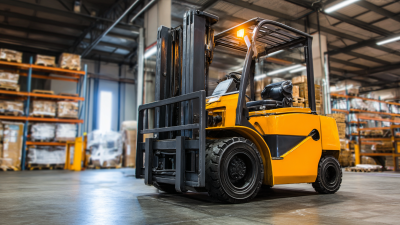
Chinese manufacturers offer several forklift types for different warehouse and outdoor tasks. Electric counterbalance models suit indoor movement, where low noise and no exhaust at the point of use matter. Reach trucks work in narrow aisles, lifting pallet loads to high rack levels. For uneven yards, buyers may consider rough-terrain forklifts with larger tires and higher ground clearance. Details matter.
Powertrain choices include lead-acid and lithium-ion batteries, as well as diesel, gasoline, or LPG engines. Lithium-ion systems can support opportunity charging during short breaks, but battery cost and charging setup need careful comparison. Some models include regenerative braking, color display panels, and telematics that record operating hours or impact events. These features are useful only when operators and managers actually use the data.
Safety equipment may include overhead guards, reversing alarms, seat belts, and speed controls. Availability and specifications vary by model, so buyers should verify rated capacity, load center, mast height, and attachment compatibility on the exact configuration. A forklift rated for one load may lift less when fitted with a sideshifter or extended forks. Catalog descriptions can look reassuring; a real duty-cycle review is less glamorous, but often reveals whether the truck fits the site.
How Global Buyers Can Evaluate Forklift Manufacturers
When comparing Chinese forklift manufacturers, evaluate the machine against your actual warehouse conditions, not just its catalogue rating. Record load weight, load center, lift height, aisle width, floor condition, and daily operating hours. Ask for the rated-capacity chart at your required lift height. A truck rated for three tonnes may not safely lift that load with a long attachment. Details matter.
Safety evidence deserves close review. The US Occupational Safety and Health Administration’s Powered Industrial Trucks guidance estimates about 85 forklift-related deaths and 34,900 serious injuries annually in the United States. These figures are not a global rate, but they show why buyers should request stability-test documentation, operator visibility details, braking specifications, and clear maintenance schedules. Check that the proposed configuration—not merely a similar model—matches the test documents. A neat catalogue is not proof.
Assess support before signing. Ask how quickly common parts can ship, where technicians are based, and what warranty exclusions apply. Request references from buyers using similar loads and shifts, then ask about real repair delays. For electric units, confirm battery capacity under your expected duty cycle and the charging setup required. I would still question unusually broad performance claims; a short, witnessed trial may reveal what a polished quotation cannot.
Export, Compliance, and After-Sales Support for International Buyers
For international buyers, export readiness starts before a forklift leaves the factory. The World Bank’s 2023 Logistics Performance Index covered 139 economies, underscoring how shipping conditions vary by market. Buyers should confirm packing standards, delivery terms, document ownership, and realistic lead times. Compliance also needs market-by-market checks: safety requirements, emissions rules, electrical specifications, labels, and operator manuals may differ. Small details matter.
After-sales support is a safety issue, not just a service feature. U.S. OSHA guidance reports about 85 forklift-related deaths and 34,900 serious injuries annually. Buyers should ask for maintenance schedules, parts availability, technician response times, and operator training materials. Request a written warranty process and a clear list of wear parts. A phone number alone is not a service plan.
A weakness in many purchasing plans is assuming that spare parts will arrive as quickly as the machine. Ask suppliers to identify commonly replaced components and local stock options before shipment. Keep serial numbers, inspection records, and service contacts accessible to operators. No support system removes every delay, and response-time promises deserve careful checking. That part is easy to overlook.
 Skip to content