Skip to content

What Is a Manual Pallet Jack and How Does It Work?

A Manual Pallet Jack may look simple, but its work begins with basic physics and careful human control. A worker slides the steel forks beneath a pallet, pumps the handle, and raises the load through a hydraulic lifting system. Pulling the handle then moves the pallet across the warehouse floor. Quietly, it performs essential work.

Rick LeBlanc, a respected material-handling industry writer, offers a practical reminder: “Simple equipment still demands disciplined handling.” That observation explains why this tool remains important in warehouses, retail stores, workshops, and loading areas. It needs no battery, charging station, or complicated control panel. However, it still requires suitable floor conditions, balanced loads, and enough space for turning.

During real use, small details matter. A damaged wheel can make the jack drift. An uneven pallet can shift during movement. A rushed operator may also pull too sharply around a corner. These problems are easy to underestimate. I have seen how a short task becomes difficult when the forks are not fully positioned beneath the pallet.

This guide explains what a Manual Pallet Jack is and how it works. It also examines its main components, lifting action, steering method, safe operating habits, and practical limitations. The machine is straightforward. Its correct use is not always effortless. Understanding that difference helps users work more confidently, protect inventory, and reduce avoidable handling mistakes.
What Is a Manual Pallet Jack and How Does It Work?

Manual Pallet Jack Definition: Common 2,000–5,500 lb Load Capacities

What Is a Manual Pallet Jack and How Does It Work?

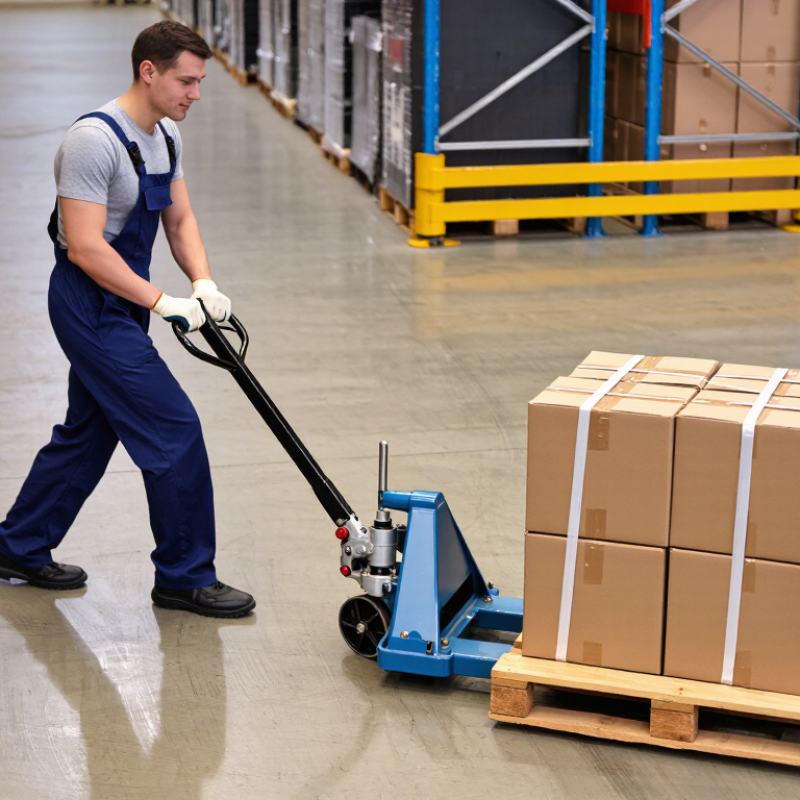
A manual pallet jack is a hand-powered tool for moving palletized goods across firm, level floors. Its two steel forks slide beneath a pallet. The operator pumps the handle to raise the forks through a hydraulic lifting system. A separate lever lowers them smoothly. Pulling or pushing the tiller steers the load through warehouse aisles.

Common models support between 2,000 and 5,500 pounds. That range sounds straightforward, but capacity depends on more than the printed rating. Load weight, balance, pallet condition, and load-center distance all matter. A 5,000-pound rating may not apply when weight sits far beyond the fork tips. The floor also matters. Cracks, ramps, and uneven surfaces can reduce control.

In practical warehouse use, a 2,000-pound jack suits lighter cartons and standard pallets. Heavier-duty models handle dense materials, machinery parts, or stacked building supplies. I have seen operators choose capacity by guessing, then struggle with steering and braking control. That assumption is easy to make, and it is wrong. Check the equipment plate, distribute the load evenly, and inspect the wheels before each shift. Short forks can leave a pallet unstable. Long forks may create clearance problems. Manual equipment feels simple, yet small errors become tiring quickly. Good training still matters.

Manual Pallet Jack Rated Load Capacities

Manual pallet jacks use a hydraulic pump handle to lift palletized loads slightly above the floor, allowing the load to be moved by pushing or pulling. Common rated capacities range from 2,000 to 5,500 lb, depending on the jack design and application.

The chart shows representative rated load-capacity categories commonly used for manual pallet jacks. Actual capacity depends on the equipment specification, load distribution, pallet condition, and operating surface.

Key Components: 27–48 in Forks, Pump, Handle, and Steering Wheels

What Is a Manual Pallet Jack and How Does It Work?

A manual pallet jack moves palletized loads through simple hydraulic force and controlled steering. Its 27–48 inch forks slide beneath the pallet openings. Shorter forks suit compact pallets and tighter spaces. Longer forks provide deeper support for larger loads, but they need more clearance when turning.

The pump sits inside the jack body and raises the forks when the operator moves the handle up and down. Each stroke sends hydraulic fluid into a lifting cylinder. Pulling the release lever lowers the forks gradually. The handle also controls steering through a linkage connected to the steering wheels. Those wheels carry much of the load and guide the jack across the floor. Load wheels beneath the forks help reduce friction and keep the pallet stable.

A level, clean floor matters.

Operators should center the load before lifting. An off-center pallet can make steering difficult and increase wheel wear. Check the forks for bends, cracks, and uneven height before use. Inspect the pump for leaks and test the release control without a load. A common mistake is choosing fork length by appearance alone. Measure the pallet opening and confirm the load’s weight distribution. Manual jacks are uncomplicated, but that simplicity can hide problems. A worn wheel or weak hydraulic seal may not look serious until the jack carries a heavy pallet.

How Hydraulic Lifting Works: From Handle Strokes to a 3 in Lift

What Is a Manual Pallet Jack and How Does It Work?

A manual pallet jack uses a handle, pump assembly, and hydraulic cylinder to raise a loaded pallet. When the operator moves the handle up and down, the pump draws hydraulic fluid into a small chamber. Each stroke adds pressure. Slowly, the lifting arms rise.

In many standard models, repeated handle strokes create about a 3 in lift. That height gives the forks enough clearance for moving pallets across a smooth warehouse floor. A check valve helps hold the pressure, while the release lever sends fluid back to the reservoir. Pull the lever gently, and the forks lower in a controlled motion. Pull it quickly, and the load may drop faster than expected. That detail is easy to overlook.

Tips: Keep the forks fully under the pallet before pumping. Check that the load is balanced and does not exceed the rated capacity. Use short, steady handle strokes instead of violent movements. Inspect the wheels, handle, and hydraulic area before use. A small oil leak can reduce lifting performance. The exact lift may vary by design, floor condition, and load weight. In practice, operators sometimes assume three inches is guaranteed. It is not. Measure the clearance when accuracy matters, and keep feet away from the fork path.

Step-by-Step Operation: Inserting Forks, Raising, Moving, and Lowering

A manual pallet jack uses hydraulic pressure to lift pallets a few inches above the floor. Its operation is simple, but safe handling depends on balance, inspection, and controlled movement. Before use, check the wheels, forks, handle, release lever, and hydraulic unit for damage or leaks. Keep the load within the rated capacity. Slide the forks fully into the pallet openings. Both forks should support the pallet evenly, not one corner. Leave the forks centered under the load.

Set the handle to its pumping position, then move it up and down steadily. Each stroke sends hydraulic fluid into the lifting cylinder. Stop when the pallet clears the floor, usually by a small margin. Do not lift higher than necessary. To travel, lower the handle into its moving position and pull the jack slowly. Pulling usually gives better visibility and control than pushing. Keep both feet outside the wheel path, and watch corners, ramps, and uneven flooring. When positioning the pallet, stop fully before lowering. Use the release lever gradually, letting the forks descend under control. Never place hands or feet beneath raised forks.

Tips: Test the release lever with an empty jack first. Move slowly near people or storage racks. If pumping feels rough, pause and inspect the mechanism. A slightly crooked load can shift unexpectedly. Rushing the final lowering step often causes avoidable bumps. Recheck the pallet after lowering; it may not sit squarely, especially on damaged boards. This is where routine can hide mistakes.

Safe Handling Practices: Centered Loads, Clear Paths, and Rated Capacity

What Is a Manual Pallet Jack and How Does It Work?

A manual pallet jack uses hydraulic pressure to lift pallets a few centimeters. The operator pumps the handle and guides the steering wheels. It looks simple. However, safe handling depends on load position, visibility, and floor conditions. The U.S. Bureau of Labor Statistics reported that musculoskeletal disorders caused 27.9% of all days-away-from-work cases in 2023. Pushing a poorly balanced load can increase that risk.

Keep the load centered across both forks, with the weight close to the fork heels. A leaning pallet can shift suddenly during turns or on uneven flooring. Check the rated capacity before moving anything. Never estimate by appearance. Capacity can change with load height, shape, and center of gravity. OSHA’s material-handling guidance supports following equipment ratings and training requirements, while ASME safety principles emphasize stable loads and controlled travel.

Clear the route before pumping the handle. Remove loose wrap, damaged boards, and small debris. Keep feet outside the wheel path. Move slowly near doorways, ramps, and blind corners. Stop when the view is blocked. Ask for help. The UK Health and Safety Executive recorded 543,000 workers with work-related musculoskeletal disorders in 2023/24. That figure is not limited to pallet-jack work, but it deserves attention. I have seen operators rush empty returns, assuming no load means no hazard. That assumption still needs challenging.

What Is a Manual Pallet Jack and How Does It Work? - Safe Handling Practices: Centered Loads, Clear Paths, and Rated Capacity

Data Dimension Typical Information How It Works or Why It Matters Safe Handling Practice
Equipment Type Manual pallet jack, also called a hand pallet truck An operator moves and steers the truck by hand rather than using an electric drive motor. Use only on surfaces and in applications suitable for manual movement.
Primary Components Forks, load wheels, steering wheels, tiller handle, hydraulic pump, lowering control, and frame The wheels support and guide the truck, while the pump and hydraulic cylinder raise the forks. Inspect wheels, forks, handle, hydraulic components, and controls before use.
Lifting Mechanism Manual hydraulic pump operated by repeated tiller strokes Pumping pressurizes hydraulic fluid, extending the lift cylinder and raising the forks enough to clear the floor. Do not exceed the rated capacity or use sudden, forceful pumping motions.
Typical Lift Height Approximately 3 inches (75 mm) to 8 inches (200 mm), depending on design The low lift raises a pallet just enough for the forks to support and transport it. Keep the load as low as practical while traveling.
Rated Capacity Common models are often rated from about 2,000 to 5,500 lb (900 to 2,500 kg) The rating is the maximum permitted load under specified conditions; actual limits vary by model and load center. Read the equipment rating plate and never exceed the lower limit of the truck, pallet, or floor.
Load Center Many pallet jacks are rated using a 24-inch (600 mm) nominal load center, but the rating plate controls A load placed farther from the fork face creates greater leverage and may reduce safe capacity. Keep the load close to the fork back and within the marked or specified load center.
Load Position Load centered across both forks, stable, and evenly distributed Centering reduces side loading, improves balance, and helps prevent pallet or product damage. Do not carry leaning, unstable, damaged, or partially supported loads.
Fork Engagement Forks should enter fully enough to support the pallet without contacting the opposite side Adequate engagement distributes weight over the forks and reduces the chance of tipping or pallet breakage. Align squarely with the pallet openings before inserting the forks.
Travel Direction Push or pull according to site procedures, visibility, slope, and load conditions The operator must maintain control and a clear view of the travel path at all times. Move at a controlled walking speed and avoid abrupt starts, stops, and turns.
Clear Travel Path Path free from people, debris, spills, holes, dock edges, and unexpected obstructions Manual pallet jacks have limited braking ability, so obstacles and poor surfaces can quickly cause loss of control. Check the route before moving and use designated pedestrian and equipment lanes where available.
Slopes and Ramps Use only when permitted by site rules and the equipment instructions A loaded pallet jack can accelerate on a slope and may become difficult to stop or steer. Avoid slopes whenever possible; never turn sideways on a slope or allow the load to run free.
Pedestrian Safety Maintain separation from people, doorways, blind corners, and crossing traffic The pallet and load may obstruct the operator’s view and create crush or struck-by hazards. Sound a warning where required, slow at intersections, and keep feet clear of wheels and forks.
Parking Forks fully lowered and equipment positioned outside travel lanes Lowered forks reduce trip and contact hazards when the equipment is unattended. Never leave raised forks unattended or block exits, fire equipment, aisles, or access points.
Pre-Use Inspection Check for leaks, bent forks, damaged wheels, loose parts, and faulty controls Early identification of defects helps prevent equipment failure and load loss. Tag out defective equipment and report it for repair; do not operate it until cleared.
Operator Position Stand behind the tiller with both hands controlling the handle when maneuvering Proper positioning improves steering control and keeps the operator away from the moving forks and wheels. Keep hands and feet inside the safe operating area and never ride on the forks or pallet.

Note: Dimensions, capacity, load-center rating, operating instructions, and limitations vary by equipment design. Always follow the specific rating plate, operator manual, workplace procedures, and applicable safety regulations.