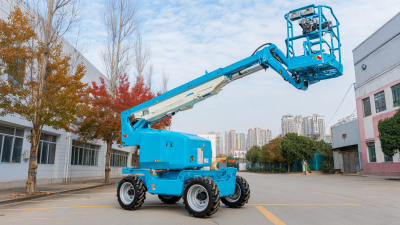
Choosing the right Articulating Boom Lift is rarely a simple matter of height. Global buyers must compare outreach, platform capacity, terrain, power systems, transport width, and local safety requirements. A machine reaching 20 metres may still fail when obstacles block a straight approach. That detail matters.
Industry research supports this careful approach. Fortune Business Insights’ Aerial Work Platform Market report identifies construction, maintenance, and infrastructure investment as major demand drivers. The International Powered Access Federation’s Global Powered Access Rental Market Survey also tracks rental growth, fleet renewal, and changing buyer preferences across regions. These reports reveal a practical reality: demand is expanding, but machine selection remains highly site-specific.
“MEWPs are one of the safest ways to work at height, when used correctly,” says Peter Douglas, CEO of the International Powered Access Federation. His point deserves attention. Safety depends on planning, operator competence, ground conditions, wind limits, and daily inspection—not on equipment size alone. OSHA guidance and the ANSI A92 series reinforce this risk-based perspective.
This guide examines the top 10 Articulating Boom Lift types for global buyers. It compares diesel, electric, hybrid, compact, crawler-mounted, and rough-terrain configurations. Each type has a useful place, yet none is perfect. A quiet electric lift may struggle on soft ground. A powerful diesel model may be unsuitable indoors. Some specifications also appear impressive until transport costs, battery charging, or service access are considered.
The goal is practical clarity. Buyers can match machine design with real working conditions, regional standards, and total ownership costs. Mistakes still happen. Good research reduces them.
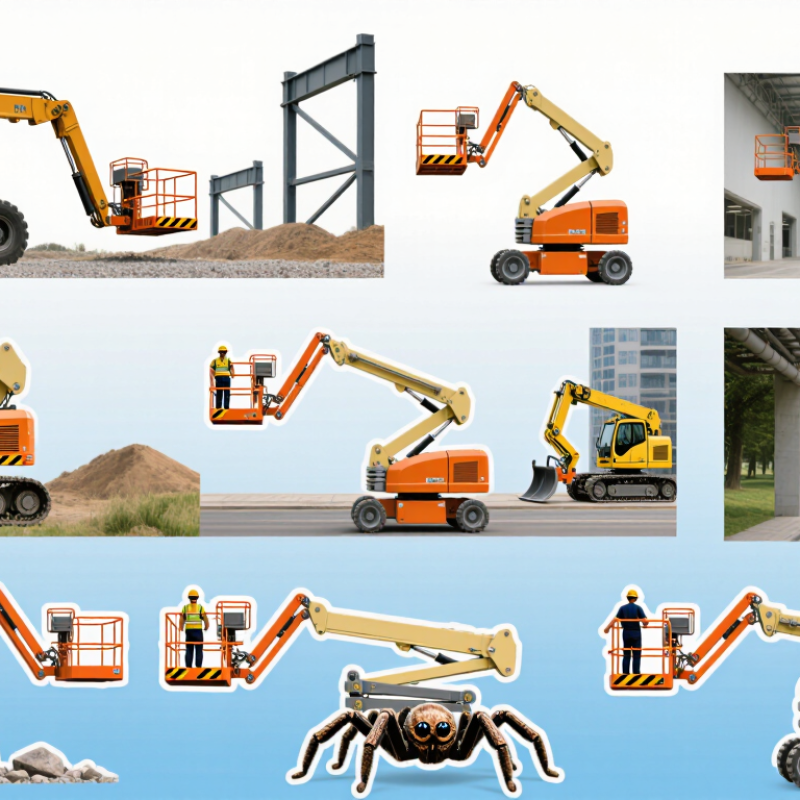
Articulating boom lifts are best classified by power source, chassis, and working environment. Common types include electric indoor, diesel rough-terrain, hybrid, compact, crawler-mounted, trailer-mounted, self-propelled, narrow-aisle, four-wheel-drive, and specialized insulated models. A neat ten-type list can mislead, because one machine may fit several categories. Classification should begin with the job, not the catalog label.
Design depends on controlled reach and stable load transfer. The articulated joints should move smoothly, without sudden platform movement. Buyers should examine maximum outreach, working height, platform capacity, turning radius, and the load chart together. A longer boom is not automatically better. It may reduce stability on uneven ground. Automatic platform leveling, proportional controls, emergency lowering, and clear diagnostic displays improve daily operation. Battery models need careful attention to charging time and cold-weather performance. Diesel models require more ventilation and routine maintenance. Insulated configurations demand verified testing and suitable safety standards for their intended work.
Tips: Measure the narrowest access point first. Check ground pressure before choosing crawler or wheeled equipment. Ask for service records, inspection data, and operator training evidence. I would also test the lift with realistic tools, not an empty platform. That small detail often exposes poor visibility, awkward controls, or limited reserve capacity. Manufacturers sometimes emphasize maximum height, while actual productivity depends on setup time, repositioning, and maintenance access.
The ten main articulating boom lift types for global buyers differ by power source, mobility, and working environment.
Electric models suit indoor sites because they produce low noise and no direct exhaust.
Diesel models handle outdoor construction, uneven ground, and longer shifts.
Hybrid models combine battery operation with an engine for changing site conditions.
Compact models fit narrow aisles and congested urban projects.
Rough-terrain models use stronger tires, stabilizers, and higher ground clearance.
Crawler articulating boom lifts move carefully across delicate surfaces and uneven access routes. Trailer-mounted models offer flexible transport between smaller jobs. Truck-mounted units provide fast relocation and useful road mobility. Telescopic-articulating models add reach when obstacles block a straight approach. Insulated models support specialized electrical work, but only with verified certification and strict operating controls.
These categories can overlap. A compact crawler may also be electric, which makes selection less simple than many brochures suggest.
Tips:
Check platform height, horizontal outreach, basket capacity, turning radius, battery endurance, and terrain limits.
Ask for duty-cycle data, not only maximum reach.
Inspect emergency lowering systems before delivery.
Confirm local training and certification requirements with a qualified safety professional.
In my field experience, buyers often focus on maximum height first. That can be a costly mistake.
A machine reaching 20 meters may still fail on a sloped, crowded site. Measure access gates, floor loading, wind exposure, and transport limits.
Keep a small safety margin. Real projects are rarely as clean as specification sheets.
Top 10 Articulating Boom Lift Types for Global Buyers?
Performance Differences Across Power, Height, and Terrain Categories
Power choice changes operating behavior. Electric articulating lifts suit warehouses, airports, and finished floors because they produce low noise and no onsite exhaust. Diesel units deliver stronger traction on mud, gravel, and gradients. Hybrid models reduce idling, but their added systems can increase inspection time. The 2024 IPAF Global Safety Report recorded 118 powered-access fatalities worldwide in 2023. That figure reinforces a practical point: power selection must match the worksite, not only the purchase price.
Height figures can mislead buyers. A 20-meter platform may reach that height vertically, yet its horizontal outreach falls when the basket carries heavier tools. Articulated joints help operators pass over tanks, beams, and machinery. They also reduce stability margins when the boom is fully extended. The 2024 global powered access rental market analysis from IPAF continues to track utilization, fleet mix, and rental demand across major regions, showing why flexible machines remain valuable for changing projects. Still, rental popularity does not prove technical suitability.
Terrain separates compact crawler types from heavy-duty rough-terrain designs. Crawler machines spread load across soft ground, while four-wheel-drive units climb uneven surfaces more confidently. Outriggers improve stability, but they need clear, firm setup zones. In field assessments, buyers often overestimate reach and underestimate ground pressure. That mistake is common. ISO 16368-based design and inspection principles help, but local training and daily ground checks remain decisive. Even experienced teams can misjudge a hidden slope.
Articulating boom lifts vary widely, from compact electric models for indoor work to diesel rough-terrain machines for construction sites. Global buyers should match each lift type with local safety rules, operator training, and inspection procedures. In North America, buyers commonly review ANSI/SAIA A92 requirements and applicable workplace regulations. European projects usually require conformity with EN 280 and valid CE documentation. Australia may require compliance with AS 2550.10 and local registration rules.
A certificate alone is not enough. Check the machine’s rated capacity, platform controls, emergency lowering system, and stability data. Ask for load-test records, maintenance history, and manuals in the local language. For imported equipment, verify whether the regional authority accepts foreign test reports. Some jurisdictions require an independent inspection before the first lift. Requirements can change between countries, and sometimes between provinces or states. That detail is easy to miss.
Tips: Confirm the standard year, not only the standard number. Train operators on slope limits and wind restrictions. Keep inspection labels visible. Test emergency controls before every shift. No checklist is perfect. A practical site review can reveal hazards that paperwork misses, especially uneven ground, overhead cables, and limited rescue access. Select indoor electric lifts for clean, low-noise areas, while four-wheel-drive units suit rough terrain. Yet even advanced equipment needs disciplined supervision.
Choosing among the top 10 articulating boom lift types requires more than checking maximum height. Compare electric indoor, hybrid, diesel, compact, crawler, trailer-mounted, self-propelled, rough-terrain, insulated, and narrow-access configurations.
Start with the worksite. Electric models suit warehouses, hotels, and low-noise projects. Diesel rough-terrain units handle mud, slopes, and uneven ground. Crawler units reduce ground pressure but usually move more slowly. Trailer-mounted lifts offer transport flexibility, although setup time can surprise inexperienced buyers. Check platform height, horizontal outreach, basket capacity, turning radius, gradeability, power source, and emergency descent performance. A 2024 market report by Fortune Business Insights valued the global aerial work platform market at about USD 10.4 billion in 2024, showing strong demand but also greater model variety. More choice does not guarantee a better fit.
Tips: Build a weighted comparison sheet. Give safety and stability the highest scores. Verify actual load charts, not brochure headlines. IPAF’s Global Safety Report 2024 recorded 118 powered-access fatalities in 2023, with falls and overturns remaining serious hazards. Ask for training records, inspection history, battery condition, and service access. On a recent-style site assessment, a smaller lift often worked better beside steel columns. That result was not obvious. No matrix is perfect. Recheck the choice after a trial lift, especially when wind, soft ground, or several workers may change the operating conditions.
| Rank | Articulating Boom Lift Type | Typical Working Height | Typical Horizontal Outreach | Typical Platform Capacity | Power and Drive | Best Operating Environment | Main Advantages | Key Limitations | Recommended Buyer Profile |
|---|---|---|---|---|---|---|---|---|---|
| 1 | Electric Indoor Articulating Boom Lift | 12–20 m (39–66 ft) |
6–12 m (20–39 ft) |
200–250 kg (440–551 lb) |
Battery-electric; two-wheel or four-wheel drive on selected models | Warehouses, factories, shopping centers, airports and indoor maintenance areas | Low noise No direct exhaust Low floor marking | Limited runtime and reduced performance on rough, wet or steep outdoor surfaces | Indoor facility operators and contractors working around people or sensitive equipment |
| 2 | Diesel Rough-Terrain Articulating Boom Lift | 16–41 m (52–135 ft) |
8–20 m (26–66 ft) |
230–450 kg (507–992 lb) |
Diesel engine; four-wheel drive; oscillating axle and rough-terrain tires are common | Construction sites, steel erection, infrastructure projects and outdoor industrial work | High reach Strong gradeability Long operating cycles | Higher noise and emissions; heavier transport requirements; unsuitable for most indoor areas | Heavy-duty construction and rental fleets requiring maximum outdoor versatility |
| 3 | Hybrid Articulating Boom Lift | 16–28 m (52–92 ft) |
8–16 m (26–52 ft) |
230–450 kg (507–992 lb) |
Diesel or combustion engine combined with battery-electric drive or energy recovery | Mixed indoor and outdoor projects, commercial construction and urban maintenance | Lower fuel use Flexible operation Reduced site noise | More complex systems and potentially higher purchase, service and diagnostic costs | Buyers needing one machine for changing site conditions and emissions-sensitive work zones |
| 4 | Compact Narrow Articulating Boom Lift | 8–14 m (26–46 ft) |
4–8 m (13–26 ft) |
120–230 kg (265–507 lb) |
Battery-electric or small combustion power; narrow chassis and tight turning radius | Retail stores, narrow aisles, residential renovation and congested urban locations | Easy access Small footprint Lower transport cost | Shorter reach and lower capacity than full-size machines; limited space for tools and materials | Service contractors working in restricted-access buildings and compact job sites |
| 5 | Trailer-Mounted Articulating Boom Lift | 10–18 m (33–59 ft) |
6–10 m (20–33 ft) |
120–230 kg (265–507 lb) |
Battery, mains electricity or compact engine; towable chassis | Building maintenance, tree care, signage, lighting and short-duration service work | Towable Low ownership cost Fast deployment | Usually lower capacity and stability than self-propelled units; requires a suitable towing vehicle | Small contractors and maintenance teams with frequent, low-volume access work |
| 6 | Truck-Mounted Articulating Boom Lift | 16–30 m (52–98 ft) |
8–16 m (26–52 ft) |
200–500 kg (441–1,102 lb) |
Vehicle-mounted hydraulic system; truck engine or auxiliary power unit | Roadside maintenance, utilities, street lighting, telecommunications and mobile service routes | Road mobility Rapid relocation Large service area | Requires road registration, operator training and adequate ground setup; vehicle size can restrict access | Utility providers and contractors moving between multiple locations each day |
| 7 | Crawler or Spider Articulating Boom Lift | 12–30 m (39–98 ft) |
6–16 m (20–52 ft) |
120–250 kg (265–551 lb) |
Battery, mains electric or hybrid power; tracked undercarriage with outriggers | Historic buildings, landscaped areas, uneven ground, atriums and locations with limited access | Low ground pressure Compact transport width Excellent leveling | Slower travel speed and more setup time; outriggers require sufficient working space | Specialist access companies and buyers protecting floors, paving or sensitive landscapes |
| 8 | Insulated Articulating Aerial Lift | 12–30 m (39–98 ft) |
8–16 m (26–52 ft) |
120–250 kg (265–551 lb) |
Electric, diesel or truck-mounted power; insulation level depends on certified configuration | Electrical utility maintenance and work near energized or potentially energized systems | Specialized protection Utility reach Multiple mounting options | Insulation is not universal; requires approved dielectric testing, procedures, PPE and clearance controls | Qualified utility and electrical-service organizations purchasing to applicable local standards |
| 9 | Telescopic-Articulating Boom Lift with Jib | 20–43 m (66–141 ft) |
12–21 m (39–69 ft) |
230–450 kg (507–992 lb) |
Usually diesel-powered; articulated base boom with telescoping sections and a jib | Large construction projects, industrial plants, stadiums and high-rise exterior work | Very high reach Obstacle clearance Flexible positioning | High machine weight, transport cost and ground pressure; requires careful setup and planning | Large contractors needing both vertical height and precise access around structures |
| 10 | Self-Leveling Articulating Boom Lift | 14–26 m (46–85 ft) |
7–14 m (23–46 ft) |
230–450 kg (507–992 lb) |
Battery-electric, hybrid or diesel; automatic chassis leveling on selected designs | Sloped construction sites, uneven terrain, civil engineering and infrastructure maintenance | Improved stability Reduced setup time Uneven-ground access | More sophisticated controls and maintenance; leveling capability does not replace site assessment | Buyers operating regularly on changing grades where conventional stabilization is time-consuming |